Present Tense of Verbs
Present Tense
A verb is a word that expresses an action, a condition or a state of being. Verbs have different forms to indicate if the action happened in the past, is currently happening, or will happen in the future. The present tense of a verb is used to indicate that an action, condition or state is:
- currently happening
- a general fact or truth
- habitual, everyday, or expected to continue for an unknown amount of time into the future.
The following table shows the present tense for the regular verb walk. Most verbs follow this pattern.
To Walk
 I walk
|
|
|
you walk
|
|
|
he walks
|
|
|
she walks
|
|
|
it walks
|
|
|
we walk
|
|
|
they walk
|

Examples
|
I see the cup.
|
|
|
She reads the book.
|
|
|
The boy closes the window.
|
|
|
We believe you.
|
|
|
The girl goes to the store.
|
|
|
He sings a song.
|
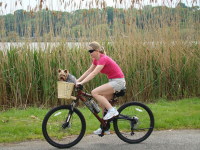

Verbs - Present Progressive Tense
In English there is also the present progressive tense, also called the present continuous, to indicate that an action is happening in the present. This is is used to emphasize that an action is happening right at this moment, or is happening now but only for a short amount of time.
The present progressive tense is formed using to be with the verb, and adding ing to the end of the verb. For example I am walking. Contractions are often used in this case. For example I'm walking.
|
I am walking
|
|
|
you are walking
|
|
|
he is walking
|
|
|
she is walking
|
|
|
it is walking
|
|
|
we are walking
|
|
|
they are walking
|
Examples
|
I'm walking to the store.
|
|
|
He's opening the door.
|
|
|
It's raining.
|
|
|
We're waiting for you.
|


To Have
Have is a very common verb that is irregular in the present tense. The following table shows the forms of have in the present tense.
|
I have
|
|
|
you have
|
|
|
he has
|
|
|
she has
|
|
|
it has
|
|
|
we have
|
|
|
they have
|
Examples
|
I have an apple.
|
|
|
She has black shoes.
|
|
|
We have a new table.
|
|
|
You have a nice house.
|
|
|
He has a blue car.
|
|
|
They have a grey cat.
|

Advertisement
Conversations
English
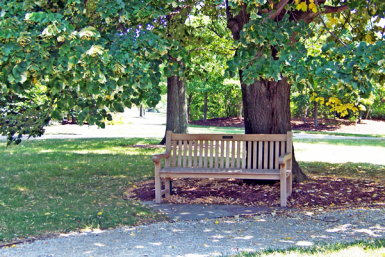
Ashley and Eric are sitting on a bench in a park enjoying a warm summer day.
Eric: What a beautiful day!
Ashley: Yes. I can't believe how warm it is.
Eric: Look at all the people walking around the park.
Ashley: I hear that it is going to rain tomorrow, so people are taking advantage of the nice weather.
Eric: Well, as much as I enjoy sitting in the sunshine, I am getting very hungry.
Ashley: You're not the only one. Let's go.
Eric and Ashley stand up and walk towards the restaurant.
Vocabulary and Phrases
|
to sit
|
|
|
park
|
|
|
to enjoy
|
|
|
warm
|
|
|
summer
|
|
|
What a beautiful day!
|
|
|
I can't believe
|
|
|
to walk
|
|
|
It is going to rain tomorrow.
|
|
|
sunshine
|
|
|
tomorrow
|
|
|
to take advantage of
|
|
|
weather
|
|
|
I am getting very hungry.
|
|
|
Let's go.
|
|
|
restaurant
|
Common Verbs
 to believe
|
|
|
to close
|
|
|
to come
|
|
|
to do
|
|
|
to find
|
|
|
to give
|
|
|
to go
|
|
|
to help
|
|
|
to lose
|
|
|
to open
|
|
|
to read
|
|
|
to see
|
|
|
to talk
|
|
|
to think
|
|
|
to want
|
Advertisement
Practice
Play the audio, then write the English word or sentence that you hear. Press the Check button to see if your answers are correct.
|
|
|
|
|
|
|
|
|
|
|
|
|
|
|
|
|
|
|
|
|
|
|
|
|
|
|
|
|
Present Tense Quiz
Complete the sentence with the present or present continuous tense of the English equivalent of the word in parentheses.