Present Tense of Verbs
Present Tense
A verb is a word that expresses an action, a condition or a state of being. In the English language, verbs have different tenses to indicate the time of the action. The present tense of a verb is used to indicates that an action, condition or state is:
- currently happening
- a general fact or truth
- habitual, everyday, or expected to continue for an unknown amount of time into the future.
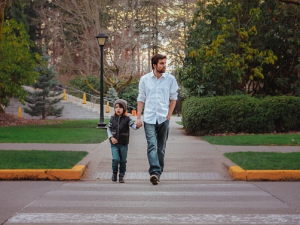
The following table shows the present tense for the regular verb walk. Most verbs follow this pattern.
To Walk (行走)
 I walk
|
我走 |
|
you walk
|
你走 |
|
he walks
|
他走 |
|
she walks
|
她走 |
|
it walks
|
它走 |
|
we walk
|
我们走 |
|
they walk
|
他们走 |
例子
|
I see the cup.
|
我看到杯子。 |
|
She reads the book.
|
她读的书。 |
|
The boy closes the window.
|
男孩关上了窗户。 |
|
We believe you.
|
我们相信你。 |
|
The girl goes to the store.
|
那女孩要去商店。 |
|
He sings a song.
|
他唱的一首歌。 |

Verbs - Present Progressive Tense
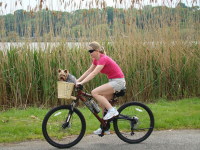
In English there is also the present progressive tense, also called the present continuous, to indicate that an action is happening in the present. This is is used to emphasize that an action is happening right at this moment, or is happening now but only for a short amount of time.
The present progressive tense is formed using to be with the verb, and adding ing to the end of the verb. For example I am walking. Contractions are often used in this case. For example I'm walking.
|
I am walking
|
我走 |
|
you are walking
|
你走 |
|
he is walking
|
他走 |
|
she is walking
|
她走 |
|
it is walking
|
是走 |
|
we are walking
|
我们走 |
|
they are walking
|
他们走 |
例子
|
I'm walking to the store.
|
我走的商店。 |
|
He's opening the door.
|
他开门。 |
|
It's raining.
|
在下雨。 |
|
We're waiting for you.
|
我们正在等你。 |


To Have (拥有)
Have 英语中很常见的动词。这个动词在 present tense 是不规则的。下表显示了 have 在 present tense 的形式。
|
I have
|
我有 |
|
you have
|
你有 |
|
he has
|
他有 |
|
she has
|
她有 |
|
it has
|
它有 |
|
we have
|
我们有 |
|
they have
|
他们有 |
例子
|
I have an apple.
|
我有一个苹果。 |
|
She has black shoes.
|
她有黑色皮鞋。 |
|
We have a new table.
|
我们有一个新表。 |
|
You have a nice house.
|
你有一个漂亮的房子。 |
|
He has a blue car.
|
他有一个蓝色的车。 |
|
They have a grey cat.
|
他们有一个灰色的猫。 |


广告
Conversations
English
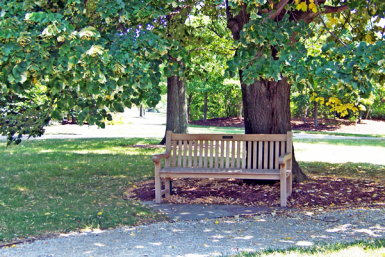
Ashley and Eric are sitting on a bench in a park enjoying a warm summer day.
Eric: What a beautiful day!
Ashley: Yes. I can't believe how warm it is.
Eric: Look at all the people walking around the park.
Ashley: I hear that it is going to rain tomorrow, so people are taking advantage of the nice weather.
Eric: Well, as much as I enjoy sitting in the sunshine, I am getting very hungry.
Ashley: You're not the only one. Let's go.
Eric and Ashley stand up and walk towards the restaurant.
汉语
阿什利和埃里克坐在公园的长凳上,享受温暖的夏日。
Eric: 多美好的一天。
Ashley: 是的。 我不敢相信这一天有多温暖。
Eric: 看看所有走在公园里的人。
Ashley: 我听说明天会下雨,所以人们享受了美好的天气。
Eric: 嗯,我喜欢坐在阳光下,我变得非常饿。
Ashley: 你并不是唯一的一个。 我们走吧。
埃里克和阿什利站起来,走向餐厅。
词汇和短语
|
to sit
|
坐 |
|
park
|
公园 |
|
to enjoy
|
享受 |
|
warm
|
暖 |
|
summer
|
夏季 |
|
What a beautiful day!
|
多美好的一天。 |
|
I can't believe
|
我无法相信 |
|
to walk
|
走, 步行 |
|
It is going to rain tomorrow.
|
这是明天要下雨。 |
|
sunshine
|
日照 |
|
tomorrow
|
明天 |
|
to take advantage of
|
利用 |
|
weather
|
天气 |
|
I am getting very hungry.
|
我变得非常饿。 |
|
Let's go.
|
我们走吧。 |
|
restaurant
|
餐厅, 餐馆 |
Common Verbs
 to believe
|
相信 |
|
to close
|
关闭 |
|
to come
|
来 |
|
to do
|
做 |
|
to find
|
发现 |
|
to give
|
给 |
|
to go
|
走 |
|
to help
|
帮助 |
|
to lose
|
失去 |
|
to open
|
打开 |
|
to read
|
读 |
|
to see
|
看到 |
|
to talk
|
谈论 |
|
to think
|
认为 |
|
to want
|
要 |
广告
练习
按音频图标,然后写出您听到的英语单词或句子。按验证按钮,看看你的答案是正确的。
|
|
|
|
|
|
|
|
|
|
|
|
|
|
|
|
|
|
|
|
|
|
|
|
|
|
|
|
|
Present Tense Quiz
用正确的英文动词填空。