Present Tense of Verbs
Present Tense
Un verbo es una palabra que expresa una acción, una condición o un estado del ser. Los verbos tienen diferentes formas para indicar si la acción ocurrió en el pasado, está ocurriendo actualmente o ocurrirá en el futuro. El tiempo presente de un verbo se usa para indicar que una acción, condición o estado es:
- actualmente sucediendo
- un hecho general o verdad
- habitual, todos los días, o se espera que continúe durante un tiempo desconocido en el futuro.
La siguiente tabla muestra el presente para el verbo regular walk. La mayoría de los verbos siguen este ejemplo.
To Walk (Andar, Caminar)
 I walk
|
yo camino |
|
you walk
|
tú caminas |
|
he walks
|
él camina |
|
she walks
|
ella camina |
|
it walks
|
camina |
|
we walk
|
caminamos |
|
they walk
|
caminan |

Ejemplos
|
I see the cup.
|
Veo la taza. |
|
She reads the book.
|
Ella lee el libro. |
|
The boy closes the window.
|
El niño cierra la ventana. |
|
We believe you.
|
Nosotros le creemos. |
|
The girl goes to the store.
|
La niña va a la tienda. |
|
He sings a song.
|
Él canta una canción. |

Verbs - Present Progressive Tense
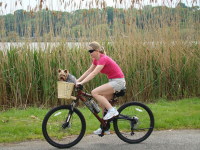
En inglés también hay el presente progresivo, present progressive en inglés, para indicar que una acción está sucediendo en el presente. Esto se utiliza para enfatizar que una acción está sucediendo en este momento, o está sucediendo ahora, pero solo por un corto período de tiempo. El presente progresivo se utiliza más a menudo en inglés que en español.
El presente progresivo se forma usando be con el verbo, y añadiendo ing al final del verbo. Por ejemplo I am walking. Las contracciones se utilizan a menudo en este caso. Por ejemplo: I'm walking.
|
I am walking
|
yo estoy caminando |
|
you are walking
|
tú estás caminando, usted está caminando |
|
he is walking
|
él está caminando |
|
she is walking
|
ella está caminando |
|
it is walking
|
está caminando |
|
we are walking
|
estamos caminando |
|
they are walking
|
están caminando |
Ejemplos
|
I'm walking to the store.
|
Estoy caminando a la tienda. |
|
He's opening the door.
|
Él está abriendo la puerta. |
|
It's raining.
|
Está lloviendo. |
|
We're waiting for you.
|
Te estamos esperando. |


To Have (Tener)
Have es un verbo muy común que es irregular en el presente. La siguiente tabla muestra las formas de have en el presente.
|
I have
|
yo tengo |
|
you have
|
tienes, tiene usted |
|
he has
|
él tiene |
|
she has
|
ella tiene |
|
it has
|
tiene |
|
we have
|
tenemos |
|
they have
|
tienen |
Ejemplos
|
I have an apple.
|
Tengo una manzana. |
|
She has black shoes.
|
Ella tiene zapatos negros. |
|
We have a new table.
|
Tenemos una nueva mesa. |
|
You have a nice house.
|
Usted tiene una bonita casa. |
|
He has a blue car.
|
Él tiene un coche azul. |
|
They have a grey cat.
|
Tienen un gato gris. |


Anuncio
Conversaciones
English
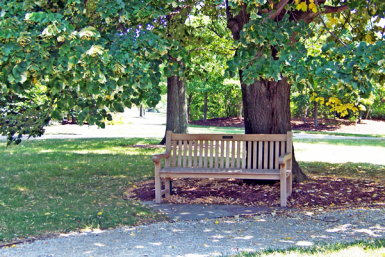
Ashley and Eric are sitting on a bench in a park enjoying a warm summer day.
Eric: What a beautiful day!
Ashley: Yes. I can't believe how warm it is.
Eric: Look at all the people walking around the park.
Ashley: I hear that it is going to rain tomorrow, so people are taking advantage of the nice weather.
Eric: Well, as much as I enjoy sitting in the sunshine, I am getting very hungry.
Ashley: You're not the only one. Let's go.
Eric and Ashley stand up and walk towards the restaurant.
Español
Ashley y Eric están sentados en un banco en un parque, disfrutando de un cálido día de verano.
Eric: ¡Qué dia tan bonito!
Ashley: Si. No puedo creer lo cálido que es.
Eric: Mira a todas las personas caminando por el parque.
Ashley: Escucho que va a llover mañana, por lo que la gente está aprovechando el buen clima.
Eric: Bueno, tanto como me gusta sentarse a la luz del sol, tengo mucha hambre.
Ashley: No eres el único. Vamonos.
Eric y Ashley se ponen de pie y caminan hacia el restaurante.
Vocabulario y Frases
|
to sit
|
sentar, sentarse |
|
park
|
parque |
|
to enjoy
|
disfrutar de |
|
warm
|
cálido, tibio |
|
summer
|
el verano |
|
What a beautiful day!
|
¡Qué dia tan bonito! |
|
I can't believe
|
No puedo creer |
|
to walk
|
andar, caminar |
|
It is going to rain tomorrow.
|
Va a llover mañana. |
|
sunshine
|
brillo solar |
|
tomorrow
|
mañana |
|
to take advantage of
|
aprovechar (de) |
|
weather
|
el tiempo |
|
I am getting very hungry.
|
Tengo mucho hambre. |
|
Let's go.
|
Vamonos. |
|
restaurant
|
restaurante |
Common Verbs
 to believe
|
creer |
|
to close
|
cerrar |
|
to come
|
venir |
|
to do
|
hacer |
|
to find
|
encontrar |
|
to give
|
dar |
|
to go
|
ir |
|
to help
|
ayudar |
|
to lose
|
perder |
|
to open
|
abrir |
|
to read
|
leer |
|
to see
|
ver |
|
to talk
|
hablar |
|
to think
|
pensar |
|
to want
|
querer |
Anuncio
Practicar
Pulsa el icono de audio, a continuación, escribir la palabra o frase inglés que se oye. Pulsa el botón Verificar para ver si tus respuestas son correctas.
|
|
|
|
|
|
|
|
|
|
|
|
|
|
|
|
|
|
|
|
|
|
|
|
|
|
|
|
|
Present Tense Quiz
Completar la frase con el presente o presente continuo del equivalente inglés de la palabra entre paréntesis.