The Seeds of Tomorrow
Aquí hay una historia en inglés sobre un grupo de personas que intentan liberarse del régimen autoritario. La historia incluye una pista de audio para que puedas escucharla mientras la lees. También ofrece texto paralelo en español para ayudarte a comparar y entender mejor el contenido.
Anuncio
The Seeds of Tomorrow
Escucha la historia.
| The Seeds of Tomorrow | Las semillas del mañana |
|---|---|
| Chapter One – The Weight of the Sky | Capítulo Uno – El Peso del Cielo |
| I’ve never seen the real sun. | Nunca he visto el sol de verdad. |
| People say it used to be warm, golden, alive. The one we have now is cold and perfect, a pale disc that never shifts in the sky. The Oligarchs call it Perfect Daylight. They say it’s “better than the old one” — no clouds, no storms, no unpredictability. | La gente dice que antes era cálido, dorado, vivo. El que tenemos ahora es frío y perfecto, un disco pálido que nunca se mueve en el cielo. Los oligarcas lo llaman «luz diurna perfecta». Dicen que es «mejor que el antiguo»: sin nubes, sin tormentas, sin imprevisibilidad. |
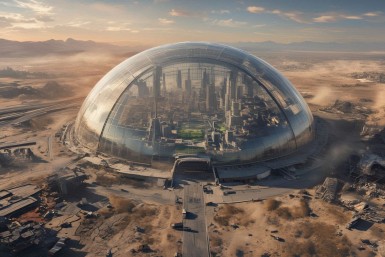
| But I’ve always thought it felt like a prison. The whole city is trapped under glass. I was born in Sector 12, in a narrow apartment that smelled of rust and boiled grain. My father was a machinist until the day he spoke too freely. My mother never told me exactly what he said, only that he “remembered too much.” Two days later, he was gone. Officially “relocated for re-education.” Unofficially… no one comes back from that. | Pero siempre he pensado que se sentía como una prisión. Toda la ciudad está atrapada bajo vidrio. Nací en el Sector 12, en un apartamento estrecho que olía a óxido y grano hervido. Mi padre era un maquinista hasta el día en que habló con demasiada libertad. Mi madre nunca me dijo exactamente qué dijo, solo que “recordaba demasiado”. Dos días después, desapareció. Oficialmente “reubicado para reeducación”. Oficiosamente… nadie regresa de eso. | Since then, I’ve learned to keep my head down. But keeping your head down doesn’t stop you from seeing. | Desde entonces, he aprendido a mantener la cabeza baja. Pero mantener la cabeza baja no te impide ver. |
| Chapter Two – Mara | Capítulo Dos – Mara |
| Mara and I grew up in the same block. She was the kind of kid who asked questions in class — the dangerous kind. I remember her once asking our history instructor why the Rootless were to blame for the Collapse. The instructor’s smile froze, and the next day Mara’s mother was “invited” to a loyalty seminar. | Mara y yo crecimos en la misma cuadra. Ella era el tipo de niña que hacía preguntas en clase - el tipo peligroso. Recuerdo que una vez le preguntó a nuestro instructor de historia por qué los Rootless eran los culpables del colapso. La sonrisa del instructor se congeló, y al día siguiente la madre de Mara fue "invitada" a un seminario de lealtad. |
| We stayed friends because we understood each other’s silences. She’s sharper than me, quicker to see the angles. But she also has this stubborn streak — she can’t let go of an idea once it’s in her head. Her father, Joren, is one of the few older people who still remembers the world before the Oligarchs tightened their grip. He doesn’t talk about it much. When he does, his voice goes quiet, like he’s afraid the memories themselves might be overheard. | Seguimos siendo amigos porque entendíamos los silencios de cada uno. Ella es más aguda que yo, más rápida para ver los ángulos. Pero también tiene esta racha terca - no puede dejar ir una idea una vez que está en su cabeza. Su padre, Joren, es una de las pocas personas mayores que aún recuerda el mundo antes de que los oligarcas estrecharan sus garras. No habla mucho al respecto. Cuando lo hace, su voz se vuelve silenciosa, como si tuviera miedo de que los propios recuerdos pudieran ser oídos. |
| Chapter Three – The Book | Capítulo Tres - El libro |
| I found it in the abandoned quarter, in what used to be a library. The roof had caved in, and the air smelled of mold and dust. I was scavenging for old circuit boards to sell when I saw it — wedged behind a collapsed shelf, its cover cracked and faded. | Lo encontré en el barrio abandonado, en lo que solía ser una biblioteca. El techo se había derrumbado y el aire olía a moho y polvo. Estaba buscando placas de circuitos viejos para vender cuando lo vi - atrapado detrás de una estantería derrumbada, su cubierta agrietada y descolorida. |
| It was a book. A real one. I’d only ever seen them in propaganda exhibits, where they were displayed as relics of a “chaotic past.” | Era un libro. Uno real. Solo los había visto en exhibiciones de propaganda, donde eran exhibidos como reliquias de un “pasado caótico.” |
| The pages were brittle, but the words… the words were alive. They spoke of a time when truth, compassion, art, and knowledge were valued. When the purpose of life wasn’t to serve the wealthy few, but to dream, to create, to explore. | Las páginas eran frágiles, pero las palabras… las palabras estaban vivas. Hablaban de una época en la que se valoraban la verdad, la compasión, el arte y el conocimiento. Cuando el propósito de la vida no era servir a unos pocos ricos, sino soñar, crear, explorar. |
| Forests that stretched beyond sight. Oceans teeming with life. Cities where people debated ideas freely, without fear. | Bosques que se extendían más allá de la vista. Océanos llenos de vida. Ciudades donde las personas discutían ideas libremente, sin miedo. |
| I read until the artificial sun dimmed. My hands shook. This wasn’t just history. This was heresy. | Leí hasta que el sol artificial se oscureció. Mis manos temblaban. Esto no era solo historia. Esto era herejía. |
| --- | --- |
| That night, I showed the book to Mara. | Esa noche, le mostré el libro a Mara. |
| “Elias…” she whispered, running her fingers over the pages. “Do you know what they’d do to you if they found this?” | «Elias…» susurró, pasando los dedos sobre las páginas. «¿Sabes lo que te harían si encontraran esto?» |
| “I know,” I said. “But read it. Just one page.” | «Lo sé», dije. «Pero léelo. Solo una página.» |
| She hesitated, then read. Her lips moved silently. When she looked up, her eyes were wet. | Ella dudó, luego leyó. Sus labios se movían en silencio. Cuando levantó la vista, sus ojos estaban húmedos. |
| “They told us the Rootless destroyed the old world,” she said. “But this says… it was the Oligarchs’ greed.” | «Nos dijeron que los Desarraigados destruyeron el viejo mundo», dijo ella. «Pero aquí dice... que fue la codicia de los oligarcas». |
| I nodded. “If people knew — really knew — maybe they’d stop blaming the wrong ones.” | Asentí con la cabeza. «Si la gente supiera, si realmente supiera, quizá dejarían de culpar a los que no tienen la culpa». |
| She shook her head. “Most won’t listen. My father remembers some of this. But he says the Oligarchs are too powerful to fight.” | Ella negó con la cabeza. «La mayoría no escuchará. Mi padre recuerda algo de esto. Pero dice que los oligarcas son demasiado poderosos para luchar contra ellos». |
| “Then we find the ones who will fight,” I said. | «Entonces encontraremos a los que lucharán», dije. |
| --- | --- |
| First, We went to see Joren. He listened as I told him about the book. | Primero fuimos a ver a Joren. Él escuchó mientras le hablaba del libro. |
| “I remember,” he said slowly. “I was a boy when the last free broadcast went out. They cut it mid-sentence. After that, the lies came every day, until people forgot there was ever another way.” | «Lo recuerdo», dijo lentamente. «Era un niño cuando se emitió la última transmisión libre. La cortaron a mitad de frase. Después de eso, las mentiras llegaron todos los días, hasta que la gente olvidó que alguna vez hubo otra forma». |
| “Then help us,” I urged. | Él negó con la cabeza. «No lo entiendes. Controlan la comida, el agua, el aire. Tienen drones en todas las calles. No puedes luchar contra ellos». |
| He shook his head. “You don’t understand. They control the food, the water, the air. They have drones in every street. You can’t fight them.” | «Entonces ayúdanos», le insistí. |
| “But if we don’t try—” | «Pero si no lo intentamos...» |
| “You’ll die,” he said flatly. “And they’ll erase you. That’s what they do.” | «Morirás», dijo con tono seco. «Y te borrarán. Eso es lo que hacen». |
| --- | --- |
| I met Riven in the market. He was selling black-market batteries, but his eyes kept flicking to the propaganda screens. | Conocí a Riven en el mercado. Vendía baterías en el mercado negro, pero no dejaba de mirar las pantallas de propaganda. |
| “You watch them like you hate them,” I said quietly. | «Los miras como si los odiaras», dije en voz baja. |
| He smirked. “I used to make them.” | Sonrió con aire burlón. «Yo solía fabricarlos». |
| That stopped me cold. “You worked for the Ministry?” | Eso me dejó helado. «¿Trabajabas para el Ministerio?». |
| “Worked,” he said. “Past tense. I quit when I realized I was building the cage I lived in.” | «Trabajé», dijo. «En pasado. Lo dejé cuando me di cuenta de que estaba construyendo la jaula en la que vivía». |
| I told him about the book. He didn’t laugh. He didn’t call me crazy. He just said, “If you’re serious, you’ll need someone who knows how to break their signal.” | Le hablé del libro. No se rió. No me llamó loco. Solo dijo: «Si vas en serio, necesitarás a alguien que sepa cómo descifrar su señal». |
| Chapter 4 – The First Meeting | Capítulo Cuatro - La primera reunión |
| We met in an abandoned subway tunnel: me, Mara, Riven, and three others — Kade, Lira, Tomas. | Nos reunimos en un túnel abandonado del metro: Mara, Riven, yo y otros tres: Kade, Lira y Tomás. |
| “This part,” I read from the book, “talks about equality of opportunity. About how no one should be born into chains.” | «Esta parte», leí del libro, «habla sobre la igualdad de oportunidades. Sobre cómo nadie debería nacer encadenado». |
| Lira leaned forward. “If this is true… everything we’ve been taught is a lie.” | Lira se inclinó hacia delante. «Si eso es cierto... todo lo que nos han enseñado es mentira». |
| “It is a lie,” Kade said. “My brother died in the mines while the Oligarchs built another tower.” | «Es mentira», dijo Kade. «Mi hermano murió en las minas mientras los oligarcas construían otra torre». |
| Tomas looked uneasy. “If we spread this… they’ll come for us.” | Tomás parecía inquieto. «Si difundimos esto... vendrán a por nosotros». |
| “They’ll come for us anyway,” Mara said. “At least this way, we choose why.” | «Vendrán a por nosotros de todos modos», dijo Mara. «Al menos así, nosotros elegimos por qué». |
|
We started small. Quotes from the book, painted in hidden corners: “Truth is the seed from which freedom grows.” “Compassion is strength.” “The Earth remembers.” Then Riven hijacked a billboard feed for three seconds. Long enough to flash one of our messages. The next day, the broadcasts doubled in fury. |
Empezamos poco a poco. Citas del libro, pintadas en rincones ocultos: «La verdad es la semilla de la que brota la libertad». «La compasión es fuerza». «La Tierra recuerda». Entonces, Riven secuestró una valla publicitaria durante tres segundos. El tiempo suficiente para mostrar uno de nuestros mensajes. Al día siguiente, las transmisiones se duplicaron con furia. |
| One day, an elderly woman stopped me in the market. “I saw your words,” she whispered. “I remember the forests. Don’t stop.” | Un día, una anciana me detuvo en el mercado. «He visto tus palabras», me susurró. «Recuerdo los bosques. No pares». |
| “Then help us,” I said. | «Entonces ayúdanos», le dije. |
| She shook her head. “I’m too old. But the young… maybe you can still change things.” | Ella negó con la cabeza. «Soy demasiado mayor. Pero los jóvenes… tal vez ustedes aún puedan cambiar las cosas.» |
| Chapter 5 - The Raid | Capítulo Cinco - La Redada |
| They came at night. Drones swarmed the tunnel. Lights, sirens, mechanical voices ordering surrender. Mara and I escaped through a maintenance shaft. Kade and Tomas weren’t so lucky. The next day, their faces were on every screen, labeled “terrorists.” | Vinieron por la noche. Drones llenaban el túnel. Luces, sirenas, voces mecánicas ordenando rendirse. Mara y yo escapamos por un conducto de mantenimiento. Kade y Tomas no tuvieron tanta suerte. Al día siguiente, sus caras estaban en todas las pantallas, etiquetadas como “terroristas”. |
| “They’ll break them,” Mara said. “Make them confess to anything.” | «Los romperán», dijo Mara. «Los obligarán a confesar cualquier cosa». |
| “Then we move faster,” I said. | «Entonces nos movemos más rápido,» dije. |
| Lira recruited more — students, laborers, even a few tech workers. Riven taught them how to slip messages into the network. | Lira reclutó a más personas: estudiantes, obreros e incluso algunos trabajadores tecnológicos. Riven les enseñó cómo introducir mensajes en la red. |
| On the anniversary of the artificial sun, we struck. Screens across the city flickered — not with smiling Oligarchs, but with forests, oceans, and laughter. Lira’s voice rang out: “This is what they took from you. This is what we can have again.” For three minutes, the city saw the truth. | En el aniversario del sol artificial, atacamos. Las pantallas de toda la ciudad parpadearon, no con oligarcas sonrientes, sino con bosques, océanos y risas. La voz de Lira resonó: «Esto es lo que te quitaron. Esto es lo que podemos recuperar.» Durante tres minutos, la ciudad vio la verdad. |
| The crackdown was brutal. Drones on every street. Dozens arrested. But something had shifted. People whispered. Some of the old ones began telling their memories to the young. Mara looked at me. “We didn’t win.” | La represión fue brutal. Drones en cada calle. Docenas arrestadas. Pero algo había cambiado. La gente susurraba. Algunos de los mayores comenzaron a contar sus recuerdos a los jóvenes. Mara me miró. «No ganamos.» |
| “No,” I said. “But we lit a fire.” | «No», dije. «Pero encendimos un fuego.» |
| Epilogue | Epílogo |
| Weeks later, I walked through the plaza. The billboards still lied. The Rootless were still hunted. But here and there, scratched into the walls, was our symbol: a small sprout, growing from the ground. The Oligarchs still ruled. But now, there was something they couldn’t erase. Hope. | Semanas después, caminé por la plaza. Los carteles seguían mintiendo. Los Sin Raíz todavía eran perseguidos. Pero aquí y allá, grabado en las paredes, estaba nuestro símbolo: un pequeño brote, creciendo desde el suelo. Los Oligarcas seguían gobernando. Pero ahora, había algo que no podían borrar. La esperanza. |