Lesson 19. Modal Verbs

Overview
In this lesson you'll learn how to use modal verbs in English. Modal verbs are a special class of helper verb that show ability, possibility, permission and obligation. The English modal verbs are can, could, may, might, must, shall, should, will, and would. Modal verbs are used very often in English.
You'll also learn some common English words related to the house and household items.
This lesson start with a short conversation to help you improve your conversational English.

Anzeige
Conversations

English
Alice is looking for an apartment to rent. She sees an ad for a one bedroom apartment in an area of the city that she'd like to live, so she she calls the number shown on the ad.
Alice: Hi. Is the one bedroom apartment still available?
Dan: It's still available. If you like, you can view it at five today or tomorrow.
Alice: I can be there at five today.
Dan: I'll see you then. Ask for Dan in unit 101.
Alice arrives at the apartment building at quarter to five. The apartment building is an older five storey building. It looks well-maintained, and Alice decides she likes the neighborhood. Just before 5:00 she rings the buzzer for unit 101.
Dan: Hello.
Alice: Hi. Is this Dan? I'm here to view the apartment.
Dan: I'll be right there.
About a minute later, Dan arrives and opens the door to the building.
Dan: Come in and I'll show you the apartment. It's on the fourth floor, so we'll take the elevator.
They get out of the elevator and walk down the hallway. At unit 425, Dan stops and unlocks the door.
Deutsch
Alice sucht nach einer Wohnung, um zu mieten. Sie sieht eine Anzeige für eine Wohnung mit einem Schlafzimmer in einem Gebiet der Stadt, in dem sie gerne leben würde, also nennt sie die in der Anzeige angezeigte Nummer.
Alice: Hallo. Ist die Wohnung mit einem Schlafzimmer noch verfügbar?
Dan: Es ist noch verfügbar. Wenn Sie möchten, können Sie es heute oder morgen um fünf ansehen.
Alice: Ich kann heute um fünf dort sein.
Dan: Wir sehen uns dann. Frag nach Dan in Einheit 101.
Alice kommt um 4:45 Uhr im Apartmentgebäude an. Das Apartmentgebäude ist ein älteres fünfstöckiges Gebäude. Es sieht gut gepflegt aus und Alice entscheidet, dass sie die Nachbarschaft mag. Kurz vor 5:00 Uhr klingelt sie den Summer für Einheit 101.
Dan: Hallo.
Alice: Hallo. Ist das Dan? Ich bin hier, um die Wohnung zu sehen.
Dan: Ich bin gleich da.
Ungefähr eine Minute später kommt Dan an und öffnet die Tür zum Gebäude.
Dan: Komm rein und ich zeige Ihnen die Wohnung. Sie liegt im vierten Stock, also nehmen wir den Aufzug.
Sie steigen aus dem Aufzug und gehen den Flur entlang. In Einheit 425 hält Dan an und schaltet die Tür auf.
English Vocabulary - House
In this section you'll learn some English words related to houses and household items.

 house
house
 roof
roof
 window
 floor
floor
 door
door
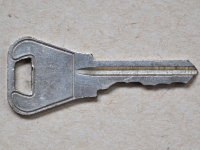 key
key
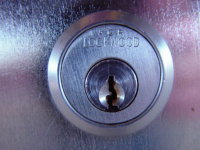 lock
lock
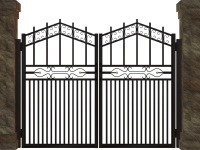 gate
gate
 fence
fence
 stairs
 lamp
lamp
 sofa, couch
 coffee table
 rug
rug
 curtains
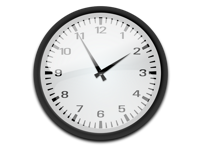 clock
clock
 bed
bed
 pillow
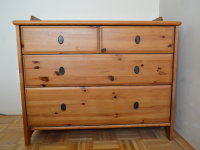 dresser
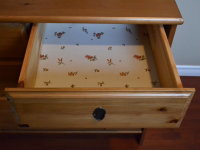 drawer
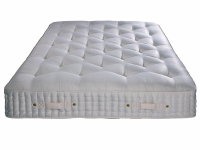 mattress
 alarm clock
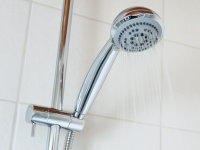 shower
 bathtub
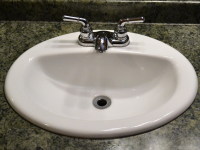 sink
sink
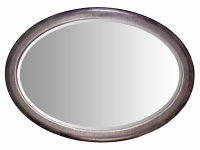 mirror
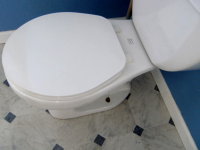 toilet
Grammar Focus: Modal Verbs
Modal verbs are special helping verbs. They add meanings such as ability, possibility, permission, obligation, advice, certainty, prediction, or willingness to another verb.
Common modal verbs include:
can, could, may, might, must, shall, should, will, would
How Modal Verbs Work
Most modal verbs follow the same basic pattern:
subject + modal verb + base form of the verb
Important Rules
Modal verbs are different from ordinary verbs in several ways.
- Do not add an s in the third-person. Example: He can swim.
- Do not use do or does when making questions. Example: Can you help me?
- For the negative form, put not after the modal verb. Example: I should not go.
- Do not use to after a modal verb. Example: She must leave.
- They do not have an infinitive form.
- They do not have all the forms of ordinary verbs.
The following sections will discuss each of the modal verbs.
Can
The modal verb can is very common and means either to have the ability to do something or to have permission to do something.
1. Ability
We use can to say that someone has the ability to do something.
Form:
subject + can + base verb
| Examples | Deutsch |
|---|---|
| I can speak English. | Ich kann Englisch sprechen. |
| She can swim across the lake. | Sie kann über den See schwimmen. |
Questions
To form a question, put the subject of the sentence after can.
| Examples | Deutsch |
|---|---|
| Can she swim? | Kann sie schwimmen? |
| Can you speak English? | Können Sie Englisch? |
Negative
To form a negative statement, use cannot or its common contraction can't.
| Examples | Deutsch |
|---|---|
| She cannot swim. | Sie kann nicht schwimmen. |
| I can't drive. | Ich kann nicht fahren. |
2. Permission
Can is also used to ask for or give permission.
| Examples | Deutsch |
|---|---|
| Can I open the window? | Darf ich das Fenster öffnen? |
| You can leave early today. | Sie können heute früh gehen. |
Could
The modal verb could has several important meanings.
1. Past Ability
Could is the simple past of can and is used for general abilities in the past.
| Examples | Deutsch |
|---|---|
| She could swim across the lake before she broke her leg. | Sie konnte über den See schwimmen, bevor sie sich das Bein brach. |
| I could swim when I was five. | Ich konnte schwimmen, als ich fünf war. |
| She could speak French when she was a child. | Sie konnte Französisch, als sie ein Kind war. |
2. Possibility
Could is used to say that something is possible.
| Examples | Deutsch |
|---|---|
| She could swim across the lake if she wanted to. | Sie könnte über den See schwimmen, wenn sie wollte. |
| It could rain tomorrow. | Es könnte morgen regnen. |
| We could miss the train. | Wir könnten den Zug verpassen. |
3. Polite Requests
Could is used very often to make polite requests.
| Examples | Deutsch |
|---|---|
| Could you help me? | Kannst du mir helfen? |
| Could you open the door? | Könntest du die Tür öffnen? |
4. Hypothetical Situations
Could is also used to talk about an ability or possibility that depends on one or more conditions.
| Examples | Deutsch |
|---|---|
| I could help you if I had more time. | Ich könnte Ihnen helfen, wenn ich mehr Zeit hätte. |
| We could go to the beach if the weather improved. | Wenn das Wetter besser wird, könnten wir an den Strand gehen. |
Could Have
Could have + past participle is used to talk about a possibility or opportunity in the past. Could have is often shortened to could've.
| Examples | Deutsch |
|---|---|
| She could have won the race. | Sie hätte das Rennen gewinnen können. |
| We could have gone to the concert. | Wir hätten das Konzert besuchen können. |
| Could she have swum across the lake? | Hätte sie den See schwimmend überqueren können? |
| She could've swum across the lake if she'd wanted to. | Sie hätte den See schwimmend überqueren können, wenn sie es gewollt hätte. |
| She could have taken the earlier train. | Sie hätte den früheren Zug nehmen können. |
| They could have forgotten about the meeting. | Sie hätten das Meeting vergessen können. |
Forms of Can / Be Able
Unlike most verbs Can only has a present and a past tense. For other forms, be able is used. The following table shows the different forms that are used.
| Infinitive | to be able |
|---|---|
| Present | can / is able |
| Past | could / was able |
| Present Perfect | have been able |
| Past Perfect | had been able |
| Conditional | would be able |
| Future | will be able |
May
Possibility
May and might are both commonly used when something is possible but uncertain.
| Examples | Deutsch |
|---|---|
| John may have an extra pen. | John hat vielleicht einen zusätzlichen Stift. |
| I may go to the concert. | Ich gehe vielleicht zum Konzert. |
| I may not have time to eat dinner. | Ich habe vielleicht keine Zeit zum Abendessen. |
| She may be able to help you. | Sie kann Ihnen vielleicht helfen. |
| It might happen. | Das könnte passieren. |
| I might not be able to do it. | Ich kann es vielleicht nicht schaffen. |
Permission
May can also be used to ask for or give permission, especially in more formal situations. In informal situations, can is more commonly used to ask for or give permission.
| Examples | Deutsch |
|---|---|
| May I go to the store? | Darf ich in den Laden? |
| May I have something to drink? | Darf ich etwas zu trinken haben? |
| You may have one chocolate bar. | Du darfst eine Tafel Schokolade haben. |
May Have and Might Have
May have + past participle and might have + past participle are both used to indicate that an event possibly happened in the past. Might have is often shortened to might've.
| Examples | Deutsch |
|---|---|
| It might have happened. | Es könnte passiert sein. |
| I may have lost the keys. | Ich habe vielleicht die Schlüssel verloren. |
Must and Have to
1. Obligation
Must and have to can both express strong obligation.
| Examples | Deutsch |
|---|---|
| You must wear a seat belt. | Du musst einen Sicherheitsgurt tragen. |
| I have to work tomorrow. | Ich muss morgen arbeiten. |
| She has to pass the exam. | Sie muss die Prüfung bestehen. |
| She must pass the exam, or she will fail the course. | Sie muss die Prüfung bestehen, sonst wird sie den Kurs nicht bestehen. |
Must is only used in the present tense. Have to is especially useful because it can change form for different grammatical contexts.
| Form | Expression |
|---|---|
| Infinitive | to have to |
| Present | must / have to |
| Past | had to |
| Present perfect | have had to |
| Past perfect | had had to |
| Conditional | would have to |
| Future | will have to |
| Examples | Deutsch |
|---|---|
| She had to leave early. | Sie musste früh gehen. |
| I'll have to do it eventually. | Irgendwann muss ich es machen. |
| She had to pass the exam to be able to pass the course. | Sie musste die Prüfung bestehen, um den Kurs bestehen zu können. |
2. Must for Strong Deductions
Must does not always express obligation. It can also express a strong conclusion based on what we know or observe.
3. Must Not and Don't Have To
Must not and don't have to have very different meanings.
| Examples | Deutsch |
|---|---|
| We've been walking for two hours. We must be near the lake. | Wir sind schon zwei Stunden lang unterwegs. Wir müssen uns in der Nähe des Sees befinden. |
| He must be almost at the lake by now. | Er muss jetzt fast am See sein. |
| I must be going too slow. | Ich muss zu langsam gehen. |
Must Not = Prohibition
Use must not or mustn't when an action is not allowed or it is very important not to do something.
| Examples | Deutsch |
|---|---|
| You mustn't leave. | Sie dürfen nicht gehen. |
| You mustn't bring food into the library. | Sie dürfen kein Essen in die Bibliothek mitbringen. |
| We must not forget to lock the door when we leave. | Wir dürfen nicht vergessen, die Tür zuzuschließen, wenn wir gehen. |
Don't Have To = No Necessity
Use don't have to when something is not necessary. You can do it, but you are not required to do it.
| Examples | Deutsch |
|---|---|
| You don't have to leave. | Sie müssen nicht gehen. |
| I don't have to bring my laptop. | Ich muss meinen Laptop nicht mitbringen. |
Must Have
Use must have + past participle to make a strong deduction about the past.
| Examples | Deutsch |
|---|---|
| I must have left my keys at home. | Ich muss meine Schlüssel zu Hause liegen gelassen haben. |
| They must have known what would happen if they did that. | Sie müssen gewusst haben, was passieren würde, wenn sie das tun würden. |
| He must've forgotten about it. | Er muss es vergessen haben. |
Should
1. Advice and Recommendations
We commonly use should to give advice or make recommendations.
Use should + base verb. Do not use to after should.
| Examples | Deutsch |
|---|---|
| You should get more exercise. | Sie sollten mehr Sport treiben. |
| You should study more. | Sie sollten mehr lernen. |
| We should see the new film. | Wir sollten uns den neuen Film ansehen. |
2. Asking for Advice
To ask for advice, put should before the subject.
should + subject + base verb?
| Examples | Deutsch |
|---|---|
| Should I study tonight? | Soll ich heute Abend studieren? |
| What should I do? | Was soll ich tun? |
| Should we leave now? | Sollen wir jetzt gehen? |
3. Negative Form: Shouldn't
Use should not or the contraction shouldn't to advise someone not to do something.
| Examples | Deutsch |
|---|---|
| You shouldn't worry. | Sie sollten sich keine Sorgen machen. |
| You shouldn't drive so fast. | Sie sollten nicht so schnell fahren. |
| We shouldn't spend so much money. | Wir sollten nicht so viel Geld ausgeben. |
4. Expectations
Should can also express an expectation. In this use, we are saying that we think something will probably happen or that we expect a situation to be true.
| Examples | Deutsch |
|---|---|
| The train should arrive soon. | Der Zug sollte bald ankommen. |
| They should be home by now. | Sie sollten jetzt zu Hause sein. |
| The package should arrive tomorrow. | Das Paket sollte morgen ankommen. |
5. Ought To
Ought to has a meaning similar to should, especially when giving advice or talking about what is appropriate.
| Examples | Deutsch |
|---|---|
| You ought to get more sleep. | Sie sollten mehr schlafen. |
| We ought to help them. | Wir sollten ihnen helfen. |
For most everyday situations, you can use should.
Shall
In everyday English, shall is most useful in questions with I and we. We commonly use it to make suggestions and offers.
Like other modal verbs, shall is followed by the base form of the verb without to.
1. Making Suggestions
Use shall we + base verb? to suggest doing something together.
| Examples | Deutsch |
|---|---|
| Shall we go? | Sollen wir gehen? |
| Shall we start? | Sollen wir anfangen? |
| Shall we eat outside? | Sollen wir draußen essen? |
| Shall we invite Marta? | Sollen wir Marta einladen? |
2. Making Offers
Use shall I + base verb? when you offer to do something for someone or ask whether they want you to do something.
| Examples | Deutsch |
|---|---|
| Shall I open the window? | Soll ich das Fenster öffnen? |
| Shall I help you? | Soll ich Ihnen helfen? |
Note: Can I ... and Would you like me to ... are both more common ways to offer to help someone.
Will
Will + base verb is one of the most common ways to talk about the future. It expresses predictions, promises, spontaneous decisions, and things we believe will happen.
The common contraction of will after a subject is 'll.
1. Predictions and Future Events
Use will when you predict or expect something to happen in the future. Will often pairs with adverbs of probability like probably, definitely, certainly, or maybe.
| Examples | Deutsch |
|---|---|
| We will talk about it later. | Wir werden später darüber reden. |
| I'm sure it will work. | Ich bin sicher, dass es klappen wird. |
| He will probably arrive soon. | Er wird wahrscheinlich bald ankommen. |
| We'll have time for dinner. | Wir werden noch Zeit zum Abendessen haben. |
2. Spontaneous Decisions
Use will when deciding something at the moment of speaking.
| Examples | Deutsch |
|---|---|
| I'll get the door. | Ich mache die Tür auf. |
| I'll call you tomorrow. | Ich rufe Sie morgen an. |
| That sounds good. I'll come! | Das klingt gut. Ich komme! |
Offers and Promises
Will is often used when making a promise, offer, or commitment to someone.| Examples | Deutsch |
|---|---|
| I will help you with your homework. | Ich helfe dir bei den Hausaufgaben. |
| We'll take care of everything. | Wir kümmern uns um alles. |
Negative Form
The negative form is will not, which is commonly contracted to won't.
| Examples | Deutsch |
|---|---|
| We won't have time for dinner. | Wir werden keine Zeit zum Abendessen haben. |
| It won't work. | Das wird nicht funktionieren. |
| They won't finish on time. | Sie werden nicht rechtzeitig fertig werden. |
Questions
To form a question, put the subject of the sentence after will.
| Examples | Deutsch |
|---|---|
| Will you go shopping after work? | Werden Sie nach der Arbeit einkaufen gehen? |
| Will they come tomorrow? | Werden sie morgen kommen? |
| What will you do? | Was werden Sie tun? |
Would
Would has several important uses. The two most common are hypothetical situations and polite requests.
1. Hypothetical Situations
Use would when talking about imaginary or unlikely situations. This is often paired with an if-clause.
Would is often contracted to 'd
| Examples | Deutsch |
|---|---|
| I'd go to the concert if I had more money. | Ich würde zum Konzert gehen, wenn ich mehr Geld hätte. |
| We would buy the house if it were cheaper. | Wir würden das Haus kaufen, wenn es billiger wäre. |
| She would travel more if she had vacation time. | Sie würde mehr reisen, wenn sie Urlaub hätte. |
| She'd help us if she could. | Sie würde uns helfen, wenn sie könnte. |
| They would help if they knew the truth. | Sie würden helfen, wenn sie die Wahrheit wüssten. |
| I'd learn Italian if I lived in Rome. | Ich würde Italienisch lernen, wenn ich in Rom leben würde. |
2. Polite Requests
Would is also common in polite requests.
| Examples | Deutsch |
|---|---|
| Would you help me? | Würden Sie mir helfen? |
| Would you open the window, please? | Würden Sie bitte das Fenster öffnen? |
Past Habits
Would can also describe repeated habits or actions that happened in the past but do not happen now. It has the same meaning as used to.
| Examples | Deutsch |
|---|---|
| When I was young, I would play outside every day. | Als ich jung war, habe ich jeden Tag draußen gespielt. |
| We would visit them every summer. | Wir haben sie jeden Sommer besucht. |
Negative Form
Would not is usually contracted to wouldn't.
| Examples | Deutsch |
|---|---|
| I wouldn't do that. | Das würde ich nicht tun. |
| They wouldn't agree. | Sie würden nicht zustimmen. |
Flashcards
Here are some flashcards to help you learn the English words for the house and household items.
Quiz
1) Schreiben Sie zu jedem Bild das englische Wort für den abgebildeten Gegenstand.
2) Schreiben Sie für jeden Satz die englische Übersetzung.