Present Tense of Irregular Verbs
In this lesson, you will master the two Spanish verbs for "to be"—ser and estar. Since both are irregular, we will break down their unique uses and conjugations. You will also discover other common irregular verbs in the present tense and learn how to use hay (there is/there are). To tie it all together, we’ve included a practical conversation example, followed by interactive flashcards and a quiz to reinforce your learning.

Advertisement
To Be
In Spanish there are two words for the verb "be": estar and ser. Both of these verbs are irregular.
Ser
Ser is used to describe more permanent conditions, the location of an event, ownership, and also expressions of time. The following table shows the different forms of ser in the present tense.
| yo soy | I am |
| tú eres | you are (singular familiar) |
| él/ella es | he/she is |
| usted es | you are (singular polite) |
| nosotros somos | we are |
| vosotros sois | you are (familiar plural) |
| ustedes son | you are (formal plural) |
| ellas/ellos son | they are (f/m) |
Examples
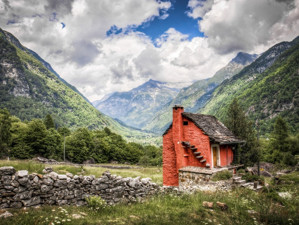
 La casa es roja.
 |
The house is red. |
|
Él es de España. |
He is from Spain. |
|
Son las cuatro de la mañana. |
It is four in the morning. |
|
El concierto es en Barcelona. |
The concert is in Barcelona. |
|
¿Eres tú ingeniero? |
Are you an engineer? |
|
La idea es de Ana.
|
It is Anna's idea. |
Related Lessons
Present TensePresent Progressive Tense
Preterite Tense
Imperfect Tense
Present and Past Perfect Tenses
Future and Conditional Tenses
Instructions and Commands
Subjunctive Mood
Irregular Verbs
Estar
Estar is used to describe location, health, and changing characteristics, such as mood or location. The following table shows the different forms of estar in the present tense.
| yo estoy | I am |
| tú estás | you are (singular familiar) |
| él/ella está | he/she is |
| usted está | you are (singular polite) |
| nosotros estamos | we are |
| vosotros estáis | you are (familiar plural) |
| ustedes están | you are (formal plural) |
| ellas/ellos están | they are (f/m) |
Examples
|
Estoy cansado.
|
I am tired. |
|
¿Estás cansado?
|
Are you tired? |
|
¿Está usted cansado?
|
Are you tired? (polite) |
|
Él está enfermo.
|
He is sick. |
|
Ella está en casa.
|
She is at home. |
|
El restaurante está en la ciudad.
|
The restaurant is in the city. |
|
Ellos están en el restaurante.
|
They are in the restaurant. |
More Irregular Verbs
There are many Spanish verbs that are irregular in the present tense. This section covers some of the more common ones.
Ir (to go)
The verb ir is very common and very irregular. The following table shows the different forms of ir in the present tense.
| yo voy | I go |
| tú vas | you go (singular familiar) |
| él/ella va | he/she goes |
| usted va | you go (singular polite) |
| nosotros vamos | we go |
| vosotros vais | you go (familiar plural) |
| ustedes van | you go (formal plural) |
| ellas/ellos van | they go (f/m) |
Examples
|
Voy al mercado.
|
I'm going to the market. |
|
¿Quieres ir conmigo?
|
Do you want to go with me? |
Tener (to have)
The Spanish verb tener means to have. The first e often changes to ie. This is a common pattern with Spanish verbs in the present tense. The following table shows the different forms of tener in the present tense.
| yo tengo | I have |
| tú tienes | you have (singular familiar) |
| él/ella tiene | he/she has |
| usted tiene | you have (singular polite) |
| nosotros tenemos | we have |
| vosotros tenéis | you have (familiar plural) |
| ustedes tienen | you have (polite plural) |
| ellas/ellos tienen | they have (f/m) |
Examples
The verb tener is often used where be is used in English.
|
Tengo miedo.
|
I am afraid. |
|
¿Tienes frio?
|
Are you cold? |
|
Pedro tiene hambre.
|
Pedro is hungry. |
|
Maria tiene sed. |
Maria is thirsty. |
|
Tenemos prisa.
|
We are in a hurry. |
|
Tienen suerte.
|
They are lucky. |
|
¿Tienen éxito?
|
Are they successful? |
|
Usted tiene las llaves.
|
You have the keys. (singular polite) |

venir (to come)
The Spanish verb venir means to come. It is conjugated in a similar maner to tener. The following table shows the different forms of venir in the present tense.
| yo vengo | I come |
| tú vienes | you come (singular familiar) |
| él/ella viene | he/she comes |
| usted viene | you come (singular polite) |
| nosotros venimos | we come |
| vosotros venís | you come (familiar plural) |
| ustedes vienen | you come (formal plural) |
| ellas/ellos vienen | they come (f/m) |
Examples
|
Ella viene a las tres.
|
She's coming at three. |
|
Vengo de Ecuador.
|
I'm from Ecuador. |
dormir (to sleep)
The Spanish verb dormir means to sleep. In several forms of the present tense the o is changed to ue. There are many other verbs that follow this pattern. The following table shows the different forms of dormir in the present tense.
| yo duermo | I sleep |
| tú duermes | you sleep (singular familiar) |
| él/ella duerme | he/she sleeps |
| usted duerme | you sleep (singular polite) |
| nosotros dormimos | we sleep |
| vosotros dormís | you sleep (familiar plural) |
| ustedes duermen | you sleep (formal plural) |
| ellas/ellos duermen | they sleep (f/m) |
Examples
|
María duerme hasta las nueve.
|
María sleeps until nine. |
|
Duermo por ocho horas.
|
I sleep for eight hours. |

Advertisement
Reflexive Verbs
Reflexive verbs are verbs whose subject and object refer to the same thing. In Spanish these verbs are used with reflexive pronouns. In the infinitive form of the verb, the reflexive pronoun is appended to the end of the verb. The following table shows the conjugation of reflexive verbs.
sentarse - to sit (oneself) down
| yo me siento | I sit down |
| tú te sientas | you sit down |
| él se sienta | he sits down |
| ella se sienta | she sits down |
| usted se sienta | you sit down (polite singular) |
| nosotros nos sentamos | we sit down |
| ustedes se sientan | you sit down (plural) |
| ellos/ellas se sientan | they sit down |
Note: The subject pronoun is usually omitted with reflexive verbs.
Common Reflexive Verbs
| acostarse | to go to bed |
| afeitarse | to shave |
| bañarse | to have a bath |
| cepillarse | to brush oneself |
| despertarse | to wake up |
| dormirse | to fall asleep |
| ducharse | to have a shower |
| lavarse | to wash oneself |
| levantarse | we get up early |
| llamarse | to call oneself |
| peinarse | to comb ones hair |
| ponerse | to put on |
| quitarse | to take off |
| secarse | to dry off |
Examples
|
Me llamo Martín.
|
My name is Martin. |
|
Me acuesto tarde.
|
I go to bed late. |
|
Se duermen temprano.
|
They fall asleep early. |
|
Se afeita por la mañana.
|
He shaves in the morning. |
|
Nos despertamos temprano.
|
We wake up early. |
The Spanish Word Hay
In Spanish the word hay is used to say both there is and there are when used to indicate existence. When there is is used to emphasize the location of an object está allí is used instead.
Examples
|
Hay un libro sobre la mesa.
|
There is a book on the table. |
|
Hay dos libros sobre la mesa.
|
There are two books on the table. |
|
¿Hay un libro sobre la mesa?
|
Is there a book on the table? |
|
Hay muchos problemas.
|
There are many problems. |
|
El libro está allí.
|
The book is there. |
|
Los libros están allí.
|
The books are there. |
Note: Problema is one of the few masculine nouns in Spanish that ends in a.
Flashcards
Here are some flashcards to help you learn the present tense of the irregular Spanish verbs that are included in this lesson.
Conversaciones
Español
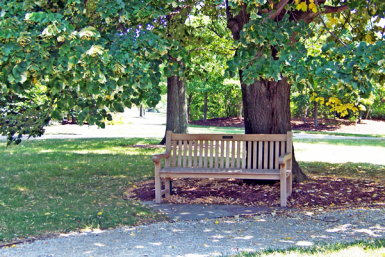
Ana y Matías están sentados en un banco en un parque, disfrutando de un cálido día de verano.
Matías: ¡Qué dia tan bonito!
Ana: Si. No puedo creer lo cálido que es.
Matías: Mira a todas las personas caminando por el parque.
Ana: Va a llover mañana, así que la gente está aprovechando el buen tiempo.
Matías: Bueno, tanto como me gusta sentarse a la luz del sol, tengo mucha hambre.
Ana: No eres el único. Vamonos.
Matías y Ana se ponen de pie y caminan hacia el restaurante.
English
Ashley and Matías are sitting on a bench in a park enjoying a warm summer day.
Matías: What a beautiful day!
Ana: Yes. I can't believe how warm it is.
Matías: Look at all the people walking around the park.
Ana: It's is going to rain tomorrow, so people are taking advantage of the nice weather.
Matías: Well, as much as I enjoy sitting in the sunshine, I am getting very hungry.
Ana: You're not the only one. Let's go.
Matías and Ana stand up and walk towards the restaurant.
Present Tense Quiz
Here is a quiz to help you learn how to conjugate the irregular verbs included in this lesson for the present tense. Rewrite each sentence with the correct Spanish verb in the present tense.