Spanish Past Perfect (Pretérito Pluscuamperfecto)
In this lesson you'll learn how to use the past perfect tense of Spanish verbs. You'll also learn some more regular verbs. This lesson also includes a summary of the different past tenses with tips on how to choose the right tense to use.
Flashcards and a quiz are included in the lesson to help you learn the past perfect tense.
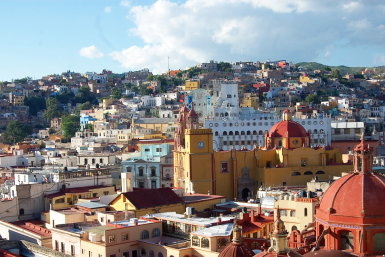
At the end of the lesson is a conversation in Spanish between two people who are talking about their vacation in Guanajuato, Mexico.
Past Perfect Tense
The Past Perfect tense, called Pretérito Pluscuamperfecto in Spanish, expresses the idea that an action happened before another action in the past.
Formation
In Spanish this tense is formed by combining the imperfect tense of the verb haber with the past participle of the verb.
The following table shows the conjugation of the past perfect tense for the three classes of verbs.
| hablar | comer | vivir | |
|---|---|---|---|
| yo | había hablado | había comido | había vivido |
| tú | habías hablado | habías comido | habías vivido |
| él, ella | había hablado | había comido | había vivido |
| nosotros | habíamos hablado | habíamos comido | habíamos vivido |
| vosotros | habíais hablado | habíais comido | habíais vivido |
| ellos, ellas | habían hablado | habían comido | habían vivido |
When to Use the Past Perfect
| Cuando llegué, ella ya había salido. | When I arrived, she had already left. |
| Cuando lo llamé, él ya había leído el mensaje. | When I called him, he had already read the message. |
| No tenía hambre porque había almorzado. | I wasn’t hungry because I had eaten lunch. |
| No entendí la historia porque no había escuchado la primera parte. | I didn’t understand the story because I hadn’t heard the first part. |
| Nunca habíamos visto algo tan bonito. | We had never seen something so beautiful. |
| No había probado sushi antes de ese día. | I had not tried sushi before that day. |
| La película fue mejor de lo que había imaginado. | The movie was better than I had imagined. |
| El examen fue más fácil de lo que habíamos pensado. | The exam was easier than we had thought. |
The following adverbs will often appear in sentences where the past perfect is used.
- ya - already
- antes - before
- nunca - never
- todavía - still, yet
- después - after
Examples
| Pedro había abierto la puerta antes de que yo llegara. | Pedro had opened the door before I arrived. |
| Yo había cerrado la puerta antes de salir. | I had closed the door before leaving. |
| Habíamos tenido que limpiar la casa antes de salir. | We had to clean the house before going out. |
| Ya había salido cuando tú llamaste. | I had already left when you called. |
| Ya habíamos comido cuando llegaron. | We had already eaten when they arrived. |
| Habíamos planeado viajar, pero empezó a llover. | We had planned to travel, but it started to rain. |
| Ella había estudiado español antes de mudarse a México. | She had studied Spanish before moving to Mexico. |
| Cuando lo conocí, ya había oído hablar de él. | When I met him, I had already heard about him. |
| ¿Habías terminado el proyecto cuando te llamaron? | Had you finished the project when they called you? |
| Nunca había estado tan cansado. | I had never been so tired. |
| Habían hecho la tarea antes de salir. | They had done the homework before leaving. |
| Había escrito una carta, pero no la envié. | I had written a letter, but I didn’t send it. |
Advertisement
Comparing the Spanish Past Tenses
Spanish has several past tenses, each with a different purpose. Understanding how they contrast helps you choose the right tense when telling stories, describing past events, or explaining sequences.
Overview of the Main Past Tenses
| Tense | Spanish Name | Main Use |
|---|---|---|
| Preterite | Pretérito Indefinido | Completed actions with a clear beginning and end |
| Imperfect | Pretérito Imperfecto | Habitual or ongoing actions in the past that are not happening anymore |
| Present Perfect | Pretérito Perfecto | Past actions connected to the present or recent past |
| Past Perfect | Pretérito Pluscuamperfecto | Action that happened before another past action |
1. Preterite vs. Imperfect
These two tenses are often compared because they both describe past events, but they answer different questions:
- Preterite: What happened?
- Imperfect: What was happening? What used to happen? What was the background?
| Spanish | English |
|---|---|
| Ayer fui al cine. | Yesterday I went to the movies. (completed action) |
| Cuando era niño, iba al cine cada sábado. | When I was a child, I used to go to the movies every Saturday. (habitual) |
| Llovía cuando empezó la película. | It was raining when the movie started. (background + event) |
| Leía un libro cuando sonó el teléfono. | I was reading a book when the phone rang. (ongoing action + interrupting event) |
2. Present Perfect vs. Preterite
Both tenses describe completed actions, but the present perfect connects the action to the present, while the preterite places it firmly in the past.
Regional note: Spain uses the present perfect more often for actions that happened “today.” Latin America prefers the preterite.
| Spanish | English |
|---|---|
| Hoy he comido temprano. | Today I have eaten early. (time period still open) |
| Ayer comí temprano. | Yesterday I ate early. (finished time period) |
| ¿Has visto mi libro? | Have you seen my book? (present relevance) |
| ¿Viste mi libro ayer? | Did you see my book yesterday? (specific past moment) |
3. Past Perfect vs. Preterite
The past perfect (pluscuamperfecto) is used for the earlier of two past actions. The preterite describes the later action.
| Spanish | English |
|---|---|
| Cuando llegué, ellos ya habían salido. | When I arrived, they had already left. |
| Después de que había estudiado, tomé el examen. | After I had studied, I took the exam. |
| Ella había vivido en Chile antes de mudarse a Perú. | She had lived in Chile before moving to Peru. |
| Ella había perdido el teléfono, pero luego lo encontró. | She had lost her phone, but then she found it. |
4. Imperfect vs. Past Perfect
These two tenses often appear together. The imperfect sets the scene; the past perfect explains what had already happened before that scene.
| Spanish | English |
|---|---|
| Había llovido mucho y las calles estaban mojadas. | It had rained a lot and the streets were wet. |
| Yo había comido, pero todavía tenía hambre. | I had eaten, but I was still hungry. |
| Cuando lo vi, ya había salido el sol y el cielo estaba claro. | When I saw him, the sun had already risen and the sky was clear. |
Vocabulary
Here are some more very common Spanish verbs. If the vowel changes in the verb, it is shown in parentheses.
| empezar (ie) | begin |
| creer | believe |
| elegir | choose |
| sentir (ie) | feel |
| pagar | pay |
| pensar (ie) | think |
| girar | turn, rotate |
| contestar | answer |
| responder | answer, reply, respond |
| preguntar | ask |
| pedir | ask for |
| romper | break |
| decidir | decide |
| ayudar | help |
| mover (ue) | move |
Examples
| Daniel empieza a ayudar. | Daniel begins to help. |
| Creemos que es verdad. | We believe it's true. |
| Elegimos ir a la playa. | We chose to go to the beach. |
| Rompieron la silla. | They broke the chair. |
| Ella pagó la cuenta. | She paid the bill. |
| Ella ya ha decidido ayudar. | She has already decided. |
| Ana ya había comenzado su viaje cuando recibió la noticia. | Ana had already started her journey when whe got the news. |
Flashcards
Here are some flashcards to help you learn the past perfect tense of Spanish verbs.
Conversaciones
Read and listen to the following conversation to help you improve your conversational Spanish.

Español
Lucía y Alejandro están de visita en Guanajuato, México. Entran a un pequeño restaurante y se sientan junto a una mesa.
Lucía: ¡No puedo creer todas las cosas que hemos hecho esta semana! Cada día ha sido una aventura diferente.
Alejandro: ¡Lo sé, Ana! Guanajuato es simplemente mágico. La caminata por los callejones y túneles fue como viajar en el tiempo.
Un camarero se acerca a su mesa.
Camarero: ¡Buenas tardes! ¿Qué les gustaría ordenar hoy?
Lucía: Buenas tardes. Me gustaría un café y una rebanada de pastel de elote, por favor.
Camarero: Excelente elección. ¿Y para usted?
Alejandro: Para mí, un cappuccino y una empanada de cajeta, por favor.
Camarero: Perfecto, un café, un cappuccino, una rebanada de pastel de elote y una empanada de cajeta. ¿Algo más que deseen?
Lucía: No, eso será todo. Muchas gracias.
El Camarero se retira para preparar sus pedidos.
Lucía: Y ni hablar de la visita a la Alhóndiga de Granaditas. La historia de ese lugar es impresionante. Me sentí como en una película.
Alejandro: Totalmente. Y la excursión al Callejón del Beso... tan romántico. Me encantó escuchar la leyenda mientras recorríamos esos pasillos estrechos.
Lucía: Sí, y la comida. ¡Qué delicia! El restaurante donde cenamos ayer era increíble. Los sabores eran tan auténticos.
Alejandro: ¡Sí! Pero mi momento favorito fue la visita al Museo de las Momias. Un poco escalofriante, pero fascinante.
Lucía: Sin duda. Además, las vistas desde el mirador del Pípila son inigualables. Ver la ciudad desde arriba, con todas esas casas de colores, fue un momento que guardaré para siempre.
Alejandro: Estoy de acuerdo. Cada rincón de Guanajuato tiene su propio encanto. ¿Te acuerdas de la serenata que nos encontramos por casualidad? Los músicos eran increíbles.
Lucía: Sí, eso fue algo mágico. ¡Qué buena suerte tuvimos! Este viaje ha sido una mezcla perfecta de cultura, historia y diversión.
El camarero regresa con sus pedidos.
camarero: Aquí tienen, un café, un cappuccino, una rebanada de pastel de elote y una empanada de cajeta. ¡Disfruten!
Lucía: Muchas gracias.
Alejandro: ¡Gracias!
Alejandro: Me alegra que hayamos decidido venir aquí. Todavía nos queda un par de días para seguir explorando. ¿Qué te gustaría hacer mañana?
Lucía: He oído hablar de una excursión a las minas. Me encantaría ver cómo trabajaban los mineros en el pasado. ¿Te animas?
Alejandro: ¡Por supuesto! Será otra aventura que añadir a nuestra lista.
English
Lucía and Alejandro are visiting Guanajuato, Mexico. They walk into a small restaurtant and sit at a table by the window.
Lucía: I can't believe all the things we've done this week! Every day has been a different adventure.
Alejandro: I know! Guanajuato is simply magical. Walking through the alleys and tunnels was like traveling back in time.
A waiter approaches their table.
Waiter: Good afternoon! What would you like to order today?
Lucía: Good afternoon. I would like a coffee and a slice of cornbread, please.
Waiter: Excellent choice. And for you?
Alejandro: For me, a cappuccino and a caramel empanada, please.
Waiter: Perfect, a coffee, a cappuccino, a slice of cornbread, and a caramel empanada. Anything else?
Lucía: No, that'll be all. Thank you very much.
The waiter goes to prepare their orders.
Lucía: And let's not forget the visit to the Alhóndiga de Granaditas. The history of that place is impressive. I felt like I was in a movie.
Alejandro: Totally. And the excursion to Callejón del Beso... so romantic. I loved hearing the legend as we walked through those narrow passages.
Lucía: Yes, and the food. What a delight! The restaurant where we ate dinner yesterday was incredible. The flavors were so authentic.
Alejandro: Yes! But my favorite moment was the visit to the Mummy Museum. A bit eerie, but fascinating.
Lucía: Without a doubt. Plus, the views from the Pipila lookout are unparalleled. Seeing the city from above, with all those colorful houses, was a moment I'll cherish forever.
Alejandro: I agree. Every corner of Guanajuato has its own charm. Do you remember the serenade we stumbled upon? The musicians were amazing.
Lucía: Yes, that was something magical. What good luck we had! This trip has been the perfect mix of culture, history, and fun.
The waiter returns with their orders
Waiter: Here you go, a coffee, a cappuccino, a slice of cornbread, and a caramel empanada. Enjoy!
Lucía: Thank you very much.
Alejandro: Thanks!
Alejandro: I'm glad we decided to come here. We still have a couple of days left to keep exploring. What would you like to do tomorrow?
Lucía: I've heard about an excursion to the mines. I'd love to see how miners worked in the past. Are you up for it?
Alejandro: Of course! It'll be another adventure to add to our list.
Practice Questions
Here are some practice questions to help you learn the past perfect tense of Spanish verbs. Include the pronoun in your answer. You can take the quiz as many times as you'd like. Each time the questions will be a bit different.