Adverbs of Frequency

Introduction
In this lesson, you'll learn how to use the English adverbs of frequency. You'll also learn some useful adverb sentence templates.
The lesson starts with a short conversation between Sarah and Cathy who are shopping for a new shirt.
Conversations
English
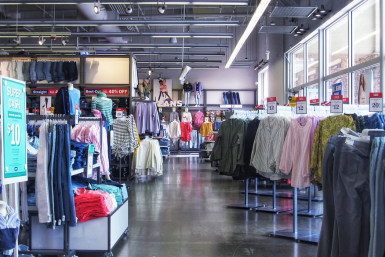
Cathy needs a new shirt, so she and Sarah walk into a clothing store.
Sarah: This t-shirt is very nice.
Cathy: Yeah, but it's too small.
Sarah: How about this blouse?
Cathy: I don't like the colour.
Sarah: These shirts are on sale and they are very cheap.
Cathy: I like the blue shirt and the red shirt.
Sarah: I think I want to buy one of these shirts too.
Cathy: Which color do you like?
Sarah: I like the white shirt.
Cathy: Let's go buy them.
Vocabulary
 This t-shirt is very nice.
|
यह टी-शर्ट बहुत अच्छी है। |
|
How about this blouse?
|
इस ब्लाउज के बारे में कैसे? |
|
I don't like ___.
|
मुझे ___ पसंद नहीं है। |
|
I think I want to buy one of these shirts too.
|
मुझे लगता है कि मैं इनमें से एक शर्ट भी खरीदना चाहता हूं। |
|
Let's go buy them.
|
चलो उन्हें खरीदते हैं। |
|
cheap
|
सस्ता |
|
shirt
|
शर्ट, कमीज़ |
विज्ञापन
Adverbs of Frequency
When talking about routines and habits, adverbs of frequency are often used. The following table shows these adverbs ordered from most frequent to least frequent.
| 100% | always |
| almost always | |
| usually | |
| often | |
| frequently | |
| sometimes | |
| occasionally | |
| seldom | |
| hardly ever | |
| rarely | |
| 0% | never |
Examples
|
They always go to the store on Monday. |
वे हमेशा सोमवार को स्टोर पर जाते हैं। |
|
I'm never late. |
मैंने कभी देरी नहीं की। |
|
She never drinks coffee. |
वह कॉफी कभी नहीं पीता है। |
|
I often drink tea in the afternoon. |
मैं अक्सर दोपहर में चाय पीता हूं। |
Sentence Templates
A very common sentence template in English is:
subject + be very + adjective.
The subject of a sentence can be a noun or pronoun.
Examples
| The pizza is very good. | पिज्जा बहुत अच्छा है। |
| We are very hungry. | हम बहुत भूखे हैं। |
| I am very happy. | मैं बहुत खुश हूं। |
| She is very smart. | वह बहुत स्मार्ट है। |
| The TV is very expensive. | टीवी बहुत महंगा है। |
| The store is not very busy. | दुकान बहुत व्यस्त नहीं है। |
Another common sentence template in English is:
subject + be too + adjective.
Examples
| The coffee is too cold. | कॉफी बहुत ठंडी है। |
| I am too tired. | मैं बहुत थका हुआ हूँ। |
| The TV is too expensive. | टीवी बहुत महंगा है। |
| Is the TV too expensive? | क्या टीवी बहुत महंगा है? |
| The TV is not too expensive. | टीवी बहुत महंगा नहीं है। |
Here are some more very common sentence templates that use the verb be, adjectives and adverbs.
- subject + be really + adjective.
- subject + be quite + adjective.
- subject + be so + adjective.
- be + subject + really so + adjective?
- subject + be pretty + adjective.
Similar templates can be used with the other linking verbs.
Examples
| She is really happy. | वह वास्तव में खुश है। |
| He is quite tall. | वह काफी लंबा है। |
| You are so nice! | तुम बहुत दयालु हो! |
| Is it really so hard? | क्या यह वास्तव में इतना मुश्किल है? |
| The coffee is pretty strong. | कॉफी बहुत मजबूत है। |
| The cookies are so good! | कुकीज़ बहुत अच्छी हैं! |
| It was pretty easy. | यह बहुत आसान था। |
| She seems really nice. | वह वास्तव में तरह लगता है। |
| I feel so tired. | मैं बहुत थक गया लग रहा है। |
| The ice feels so cold. | बर्फ इतना ठंडा लगता है। |
| Does it really look so bad? | क्या यह वास्तव में इतना बुरा लग रही हो? |
| They look pretty tired. | वे काफी थके हुए लग रहे हैं। |
अभ्यास
ऑडियो चलाएं, फिर अंग्रेजी शब्द या वाक्य लिखें जो आप सुनते हैं। यह देखने के लिए कि आपके उत्तर सही हैं या नहीं, Check बटन दबाएं।
|
|
|
|
|
|
|
|
|
|
|
|
|
|
Quiz
Put the words in the correct order. Make sure to use correct capitalization and punctuation.
Question: good very drink is the. Answer: The drink is very good.
1) not it very is expensive.
2) too is pizza the cold.
3) often boy hungry is the.
4) long too movie the is?
5) tired very girl the is.
6) always go I store the to.
7) angry look the people very.
8) pillow soft very not the is.
9) too cup hot the feels.
10) hard really it so is?