Swedish Pronouns
In this lesson, you'll learn the Swedish personal and demonstrative pronouns. Personal pronouns in Swedish have a subject, object, reflexive, and possessive form, and each of these will be covered in the lesson.
You'll also learn some Swedish words for household items.
Flashcards and a quiz are included to help you learn the vocabulary included in this lesson.
Personal Pronouns
| Swedish Subject | Swedish Object | Swedish Possessive | English |
| jag | mig | min, mitt, mina | I |
| du | dig | din, ditt, dina | you (one person) |
| han | honom | hans | he |
| hon | henne | hennes | she |
| den, det | den, det | dess | it |
| vi | oss | vår, vårt, våra | we |
| ni | er | er, ert, era | you (plural) |
| de | dem | deras | they |
The g in jag is often not pronounced. Mig is pronounced may and dig is pronounced day. De is often pronounced dom or in some areas dee.
The possessive forms of some pronouns vary depending on whether the noun that follows is common, neuter, or plural.
Examples
| Mina händer är kalla | My hands are cold |
| Mitt bord är nytt | My table is new |
| Min stol är bekväm | My chair is comfortable |
Reflexive Pronouns
Reflexives pronouns are used when the object of a sentence is the same as the subject of the sentence. In Swedish there are many verbs that require using a reflexive pronoun. These are called reflexive verbs.
The following table lists the reflexive pronouns.
| Swedish | English |
|---|---|
| mig | myself |
| dig | yourself |
| sig | himself/herself/itself |
| oss | ourselves |
| er | yourselves |
| sig | theirselves |
Demonstrative Pronouns
Demonstrative pronouns are pronouns that point to a specific object. The demonstrative pronouns in English are this, these, that, and those.
| Swedish | English |
|---|---|
| den här / det här | this |
| de här | these |
| den där / det där | that |
| de där | those |
Examples
| Jag vill ha den här | I want this one. |
| Jag vill ha de här | I want these ones |
| Jag vill ha den där | I want that one |
| Jag vill ha de där | I want those ones |
Advertisement
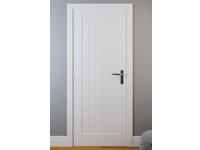
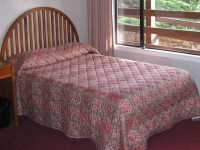
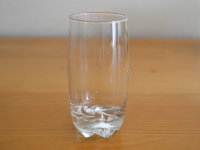
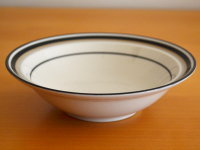
House and Home Vocabulary
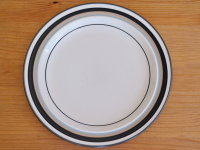
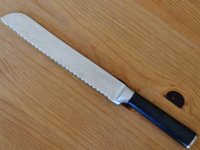
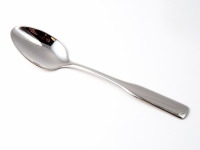
In this section, you learn some Swedish vocabulary related to the house and home. The Swedish word is given for each of the following images along with the indefinite article. The plural form is given in parentheses. For example: en dörr (ar). In this case en dörr means a door, and dörrar means doors. (-) means there is no plural form of the noun. See the lesson on nouns for more information about the plural of nouns in Swedish.