Prepositions of Relationship, Purpose, and Possession

Overview
In this lesson, you'll learn some English prepositions that are used to indicate relationships, purpose, and possession. You'll also learn some useful compound prepositions.
Example sentences and an interactive quiz are included to help you learn the prepsitions covered in this lesson.
The lesson starts with Chapter 8 of the story Ana and Alejandro in Vancouver, where they visit the Londale Quay Public Market for the first time. Audio is included so you can both read and listen to the story.
Anuncio
Chapter 8: A Trip to North Vancouver
Chapter Vocabulary
| It is a perfect day for exploring | Es un día perfecto para explorar |
| Ana and Alejandro decide to visit | Ana y Alejandro deciden ir a visitar |
| Ana suggests | Ana sugiere |
| station | estación |
| tourist | tourista, tourismo |
| to board | abordar |
| amazing | increíble |
| to arrive | llegar |
| market | mercado |
| vendor | vendedor |
| They try a piece of smoked salmon | Prueban un trozo de salmón ahumado |
| atmosphere | ambiente |
| relaxed | relajado |
| Vancouver keeps surprising me. | Vancouver sigue sorprendiéndome. |
Story
Listen to the story
Saturday morning arrives with clear skies and bright sunshine. It is a perfect day for exploring, so Ana and Alejandro decide to visit North Vancouver, a place they’ve heard a lot about.
“Let’s take the SeaBus,” Ana suggests. “I want to see the city from the water.”
They take the bus downtown and walk into Waterfront Station. The building is busy, full of travelers, families, and tourists looking at maps. The air smells faintly of the ocean.
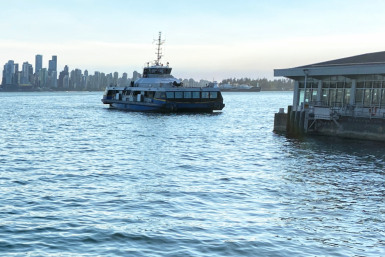
When the SeaBus arrives, they get on and find seats by the window. As the ferry pulls away from the dock, the view opens up. The tall buildings of downtown are behind them, and the North Shore mountains are in front of them.
“This is amazing,” Alejandro says. “It feels like we’re in a postcard.”
Ana takes several pictures. “I love how the mountains look from here. They seem so close.”
After about 15 minutes, they arrive at Lonsdale Quay. The market is lively, with vendors selling everything from handmade jewelry to fresh fruit. A musician plays guitar and sings a pretty song near the entrance, adding to the atmosphere.
“Let’s walk around,” Ana says.
They try a small piece of smoked salmon and some local cheese. Then they buy a bag of dried mango, sandwiches, and coffee. They walk outside to the pier, where the air is cool and fresh. They sit at a picnic table and eat their lunch.
“I could stay here all day,” Alejandro says, watching the boats move across the water.
“Me too,” Ana says. “Vancouver keeps surprising me.”
After exploring for a couple more hours, they take the SeaBus back, feeling relaxed and happy after their trip.
Prepositions of Relationship, Purpose, and Possession
Prepositions of relationship, purpose, and possession show how people, places, or things connect to each other. This section describes some of these common prepositions.
With
With is used to indicate accompaniment, connection, or the instrument used to perform an action.
| I am going to the cinema with my brother. | Voy al cine con mi hermano. |
| She cut the cake with a sharp knife. | Ella cortó el pastel con un cuchillo afilado. |
| Can you go with me to the concert? | ¿Se puede ir conmigo al concierto? |
Without
Without is used to indicate the absence of something or someone.
| He managed to finish the marathon without any water. | Él logró terminar el maratón sin agua. |
| It is difficult to navigate the city without a map. | Es difícil navegar la ciudad sin un mapa. |
Against
Against is used to indicate opposition, disagreement, or physical contact/pressure.
| The local community voted against the new development. | La comunidad local votó en contra del nuevo desarrollo. |
| He leaned his bicycle against the brick wall. | Él apoyó su bicicleta contra la pared de ladrillos. |
For
For is used to indicate purpose, reason, or the person intended to receive something.
| I bought this bouquet of flowers for my mother. | Compré este ramo de flores para mi madre. |
| They are studying hard for their final exams. | Ellos están estudiando mucho para sus exámenes finales. |
| He waited for two hours. | Esperó dos horas. |
Of
Of is used to indicate belonging, origin, or the material something is made from.
| This is the first page of the book. | Esta es la primera página del libro. |
| The table is made of solid oak. | La mesa está hecha de roble macizo. |
About
About is used to indicate the subject or topic of a conversation, book, or thought.
| The story is about a cat. | La historia trata de un gato. |
| We were talking about our plans for the summer. | Estábamos hablando sobre nuestros planes para el verano. |
| I am reading a fascinating story about space travel. | Estoy leyendo una historia fascinante sobre viajes espaciales. |
Compound Prepositions
A compound preposition consists of two or more words, but acts like a single preposition. The following table shows some common compound prepositions.
| ahead of | as far as | because of | by means of |
| in addition to | in back of | in case of | in regard to |
| in spite of | instead of | next to | out of |
Examples
| They arrived ahead of me. | Llegaron por delante de mí. |
| Your jacket is next to the door. | Su chaqueta está al lado de la puerta. |
| I finished in spite of the interruptions. | Terminé a pesar de las interrupciones. |
Quiz
Fill in the blank with the best preposition from the choices in parentheses.