Demonstrative Adjectives and Pronouns
Learning Objectives
- Learn how to use the French demonstrative adjectives.
- Learn how to use the French demonstrative pronouns.
- Learn the French words for the home and furniture.

Grammar
Demonstratives in French, like their English counterparts ("this," "that," "these," "those"), are used to point out or specify particular people or things. They fall into two main categories: Demonstrative Adjectives and Demonstrative Pronouns.
Les Adjectifs Démonstratifs
The demonstrative adjectives in French are used before a noun and agree with that noun in gender and number. They translate to "this," "that," "these," or "those."
The Basic Forms: Ce, Cette, Ces
| French Adjective + Noun | English Translation |
|---|---|
| Ce livre (Masc. Sg.) | This book / That book |
| Cette chaise (Fem. Sg.) | This chair / That chair |
| Ces étudiants (Pl.) | These students / Those students |
The Vowel/H Rule: Cet
To make pronounciation easier by avoiding a vowel clash, ce changes to cet when the following masculine singular noun starts with a vowel or a silent 'h'.
| French Adjective + Noun | English Translation |
|---|---|
| Cet avion (Masc. Sg. + Vowel) | This plane / That plane |
| Cet homme (Masc. Sg. + Silent 'h') | This man / That man |
Adding Specificity: -ci and -là
To distinguish between "this" (close) and "that" (far), you append the suffixes -ci (here/close) or -là (there/far) to the end of the noun.
| French Structure | Meaning |
|---|---|
| Ce livre-ci | This book (close to me) |
| Cette chaise-là | That chair (over there) |
Les Pronoms Démonstratifs (Demonstrative Pronouns)
Demonstrative pronouns are used to replace a previously mentioned noun. They stand alone and must also agree with the replaced noun's gender and number. They translate to "the one(s)," "this one(s)," or "that one(s)."
| Masc. Sg. | Fem. Sg. | Masc. Pl. | Fem. Pl. | English Meaning |
|---|---|---|---|---|
| celui | celle | ceux | celles | The one(s) |
Simple forms cannot stand alone without being followed by a specific clause (e.g., qui, que, or de).
| Cette maison est celle que je préfère. | This house is the one that I prefer. |
| Ces maisons sont celles que je préfère. | These houses are the ones that I prefer. |
| Ce livre est celui que je préfère. | This book is the one that I prefer. |
| Ces livres sont ceux que je préfère. | These books are the ones that I prefer. |
| Je préfère ces boulangeries à celles de Paris. | I prefer these bakeries to the ones in Paris. |
Adding Specificity: -ci and -là
| Masc. Sg. | Fem. Sg. | Masc. Pl. | Fem. Pl. | English Meaning | |
|---|---|---|---|---|---|
| Near | celui-ci | celle-ci | ceux-ci | celles-ci | This one / These ones |
| Far | celui-là | celle-là | ceux-là | celles-là | That one / Those ones |
| J'aime celui-ci mais je préfère celui-là. (referring to livre) | I like this one but I prefer that one. |
| Tu veux celles-ci ou celles-là ? (referring to fleurs) | Do you want these ones or those ones? |
Le Pronom Démonstratif Neutre (The Neutral Demonstrative Pronoun)
The neutral demonstrative pronoun (ce, ceci, cela, ça) refers to an idea, a situation, a clause, or an unspecified thing. It means "it," "this," or "that."
Advertisement
House and Furniture




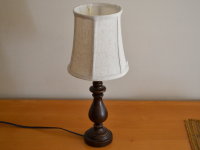
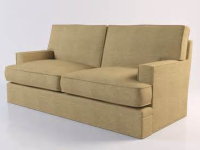
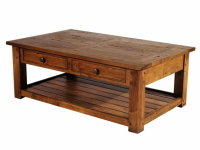
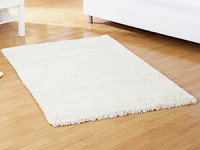


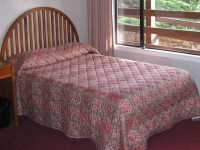

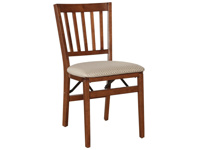
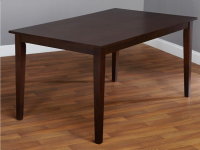


Flashcards
Here are some flashcards to help you learn the French demonstrative adjectives, demonstrative pronouns, and words related the house and furniture.
Practice
Here is a quiz to help you learn the French demonstrative adjectives and the French words related to the house and furniture.