L'impératif and Travel Vocabulary
Learning Objectives
- Understand how to form and use the imperative for tu, nous, vous when giving directions and making requests.
- Learn key travel vocabulary (transport, directions, travel essentials).
- Practice giving/getting directions and making polite requests through examples, dialogues, and exercises.
- Master placement of object and reflexive pronouns in affirmative and negative commands.
Grammar
The Imperative mood (l'impératif)
The imperative (l'impératif in French) is a verb mood used to express commands, requests, advice, or suggestions. The imperative forms are derived primarily from the present tense conjugation. There are three forms of the imperative: informal singular, polite singular and plural, and inclusive (let's ...). As in English, the imperative is used without a subject pronoun.
er verbs
familiar singular
For regular er verbs like écouter, the imperative is formed by dropping the r from the infinitive. For example: Écoute! means Listen! (when talking to one friend or family member).
plural and polite singular
The plural and polite form of the imperative is the same as the vous form of the present tense. For example: Écoutez! means Listen! (when talking to more than one friend or family member, or when being polite).
inclusive
The inclusive form of the imperative is equivalent to 'Let's ....' in English. It uses the nous form of the verb in French. For example: Écoutons. means Let's listen.
examples
| Écoutez attentivement. (polite and familiar plural) | Listen carefully. |
| Commence par le début. (familiar singular) | Start from the beginning. |
| Cherchons un autre restaurant. | Let's find another restaurant. |
| Tourne ici. (familiar singular) | Turn here. |
| Tournez ici. (polite and familiar plural) | Turn here. |
| Prenez la première rue à gauche et continuez tout droit. (polite and familiar plural) | Take the first street on the left and continue straight ahead. |
| Ferme la porte ! (familiar singular) | Close the door ! |
ir and re verbs
familiar Singular
For ir and re verbs, the familiar singular is formed using the familiar singular form of the verb. For example: Finis tes devoirs ! means Finish your homework! (to one friend or family member).
plural and polite singular
The plural and polite form of the imperative is the same as the vous form of the present tense. For example: Finissez devoirs ! means Finish your homework! (when talking to more than one friend or family member, or when being polite).
inclusive
The inclusive form of the imperative for ir and re verbs also use the nous form of the verb in French. For example: Finissons nos devoirs. means Let's finish our homework.
examples
| Finis ton travail. | Finish your work. |
| Attends ici. (familiar singular) | Wait here. |
| Attendez ici. (Polite and familiar plural) | Wait here. |
| Dis à ton frère de nous rejoindre. (familiar singular) | Tell your brother to join us. |
| Attendez une autre opportunité. (polite and familiar plural) | Wait for another opportunity. |
| Choisissez un autre livre. (polite and familiar plural) | Choose another book. |
| Vendons la voiture. | Let's sell the car. |
| Descends au prochain arrêt et traverse la place. | Get off at the next stop and cross the square. |
Irregular verbs
A few very common verbs have irregular imperative forms.
| infinitive | familiar | polite / plural | Inclusive | |
|---|---|---|---|---|
| aller | va | allez | allons | go |
| être | sois | soyez | soyons | be |
| avoir | aie | ayez | ayons | have |
| savoir | sache | sachez | sachons | know |
Examples
| Allons à la plage. | let's go to the beach. |
| Va au magasin. | Go to the store. |
| Aie confiance en toi. | Have confidence in yourself |
| Ayez de la sympathie pour eux. | Have some sympathy for them. |
| Soyez patient. | Be patient. |
| Sois reconnaissant d’avoir de bons amis. | Be thankfull that you have good friends. |
| Soyons plus positifs. | Let's be more positive. |
| Sache la vérité. | Know the truth. |
Imperative with Object Pronouns
When using object pronouns (like le, la, les, y, en) in the affirmative imperative, they follow the verb and are connected by hyphens. Me changes to moi and te changes to toi.
In a negative imperative, the object pronouns come before the verb without a hyphen. The following examples will make it easier to understand.
Examples
| Donne‑moi la clé. | Give me the key. |
| Ne me donnez pas la clé. | Don't give me the key. |
| Donne-le-moi. | Give it to me. |
| Ne me le donne pas. | Don't give it to me. |
| Lève-toi. | Get up |
| Ne te lève pas. | Don't get up |
| Va-t'en ! | Go away! |
| Mangez-en. | Eat some. |
| Promène-toi ! | take a walk! |
Advertisement
Transportation
Here are some common French words related to travel and transportation.

 la route
 la rue
 l'autoroute
 le pont
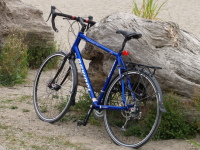 la bicyclette, le vélo
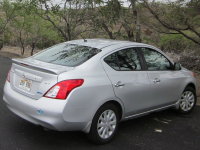 la voiture
 la moto
 le camion
 le bus
 la gare
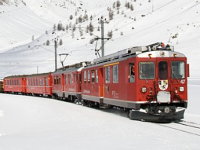 le train
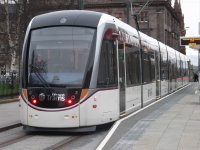 le tram
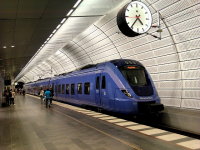 le métro
 le cargo
 l'avion
 l'aéroport
 le bateau
 le voilier
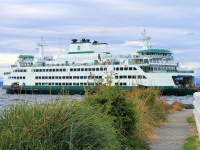 le ferry
| le billet | the ticket | |
| le quai | the platform | |
| la valise | the suitcase | |
| le carrefour | the intersection | |
| le coin | the corner | |
| l'hôtel (m.) | the hotel | |
| la chambre | the room | |
| une réservation | a reservation | |
| le passeport | the passport | |
| la douane | customs |
Flashcards
Here are some flashcards to help you learn the French words related to travel and transportation.
Giving Directions
| Tout droit | Straight ahead |
| À droite | To the right |
| À gauche | To the left |
| Le feu rouge | The traffic light |
| Le carrefour | The intersection |
| Le coin | The corner |
| L'office de tourisme | The tourist office |
| Où est___ ? | Where is___? |
| C'est loin ? | Is it far? |
| Tourne à droite au prochain feu. | Turn right at the next light. |
| Prenez la première rue à gauche et continuez tout droit. | Take the first street on the left and continue straight ahead. |
| Descendez au prochain arrêt. | Get off at the next stop |
| Où est-ce que je peux acheter un billet? | Where can I buy a ticket? |
| Combien coûte un billet pour _____ ? | How much is a ticket to _____? |
| Un billet pour _____, s'il vous plaît. | One ticket to _____ please. |
| Ce bus s'arrête-t-il à _____ ? | Does this bus stop at _____? |
| Est-ce que cette place est libre? | Is this seat free? |
| Cette place est occupée. | This seat is taken. |
| Quelle est c'est gar? | What station is this? |
| Comment arrive-je à la gare? | How do I get to the train station? |
Conversations
Conversation 1
| Excusez‑moi, où est la gare ? | Excuse me, where is the station? |
| Prenez cette rue, continuez tout droit, puis tournez à gauche au deuxième feu. La gare est en face de la poste. | Take this street, continue straight, then turn left at the second traffic light. The station is opposite the post office. |
| Merci beaucoup. | Thank you very much. |
| De rien, bonne journée. | You're welcome, have a good day. |
Conversation 2
| Pardon, pouvez‑vous me dire où descendre pour le musée ? | Excuse me, can you tell me where to get off for the museum? |
| Descendez à l’arrêt musée et traversez la rue. Prenez la première à droite. | Get off at the museum stop and cross the street. Take the first right. |
| Merci. | Thanks. |
| Avec plaisir. | With pleasure. |
Conversation 3
| Allons au centre-ville pour le déjeuner. | Let's go downtown for lunch. |
| D’accord. Prenons le tram, descendons à l’arrêt République et mangeons dans un restaurant de la rue piétonne. | Okay. Let's take the tram, get off at the République stop, and eat at a restaurant on the pedestrian street. |
Practice Exercises
Results
Score: / (%)