Lesson 15. Commands and Instructions

Overview
In this lesson you'll learn the imperative form of verbs. This is the form of the verb that is used when giving instructions, directions, commands, and making requests. You'll also learn some English words related to cities and towns.
Chapter 6 of the story "A New Life in Vancouver is also included."
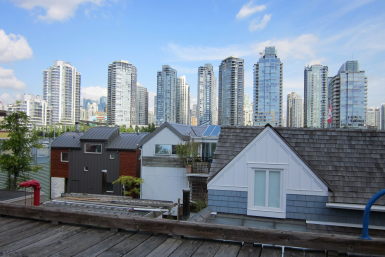
The lesson starts with a travel video featuring Vancouver to help you improve your English listening skills.
Grammar Focus
The Imperative Mood
The imperative mood is used to issue commands, give orders, make requests, or provide instructions.
Forming the Imperative
In English, the imperative uses the base form of the verb (the infinitive without "to"). The subject "you" is understood but omitted. While urgent commands often end with an exclamation mark (!), standard instructions typically end with a period (.). To soften a command into a polite request, you can add the word "Please." However, because the imperative can sometimes sound blunt or forceful, formal requests are often phrased as questions For example, "Could you please...?" rather than direct commands.
| Infinitive | Imperative |
|---|---|
| be | be |
| open | open |
| make | make |
| do | do |
| go | go |
| give | give |
To create a negative command, start the sentence with Don't, followed by the imperative form of the verb.
Examples
| Give it to me! (command) | me dê isto! |
| Please give it to me. (request) | Por favor me dê. |
| Go away! (command) | Vá embora! |
| Don't go away! (command) | Não vá embora! |
| Please don't go! (request) | Por favor não vá. |
| Go straight ahead for two blocks, then turn right on Main street. (instructions) | Siga em frente por dois quarteirões e vire à direita na 'main street'. |
| Hold the flashlight. (command) | Segure a lanterna. |
| Pour in two cups of water. (instructions) | Coloque duas xícaras de água. |
| Cook for ten minutes. (instructions) | Cozinhe por dez minutos. |
Giving Directions Example

Go straight ahead for three blocks.
Turn left and keep going until the the traffic light.
Turn right and go for about five blocks.
You'll see a small school.
Walk past the school and turn left.
Keep going for another couple of blocks and you'll see the book store.
Recipe Example

Ingredients
3/4 cup granulated sugar
3/4 cup packed brown sugar
1 cup butter or margarine, softened
1 teaspoon vanilla
1 egg
2 1/4 cups all-purpose flour
1 teaspoon baking soda
1/2 teaspoon salt
1 cup coarsely chopped nuts
1 package (12 ounces) semisweet chocolate chips (2 cups)
Steps
1 Heat oven to 375ºF.
2 Mix sugars, butter, vanilla and egg in large bowl.
3 Stir in flour, baking soda and salt (dough will be stiff).
4 Stir in nuts and chocolate chips.
5 Put dough by rounded tablespoonfuls about 2 inches apart onto an ungreased cookie sheet.
6 Bake 8 to 10 minutes or until light brown (centers will be soft).
7 Allow to cool slightly, then remove from cookie sheet.
8 Place on wire rack and let cool.
Inclusive imperative
The inclusive imperative is a unique form of the imperative mood because it suggests an action that includes the speaker. While a standard imperative like "Go!" directs someone else to move, the inclusive imperative "Let’s go!" means "I am going, and I want you to come with me."
Vocabulary
Here are some common English words related to cities and towns.
 city
city |
cidade |
|
town |
cidade pequena |
|
village |
aldeia |
|
downtown |
centro da cidade |
|
suburbs |
subúrbios, arrabaldes |
|
sidewalk |
calçada |
|
street |
rua |
|
crosswalk |
faixa de pedestre |
|
bridge |
ponte |
|
park |
parque |
|
house |
casa |
|
building |
edifício, prédio |
|
warehouse |
armazém |
|
train station |
estação de trem |
|
subway station |
estação de metrô |
|
restaurant |
restaurante |
|
supermarket |
supermercado |
|
store |
loja |
|
theater, theatre |
teatro |
|
stadium |
estádio |
Anúncio
Story: A New Life in Vancouver
Vocabulary
| umbrella | guarda-chuva |
| sidewalk | calçada |
| to splash | esguichar |
| drive | dirigir |
| cozy | aconchegante |
| to explore | explorar |
| to relax | relaxar |
Chapter 6: A Rainy Day
On Wednesday morning, Ana wakes up to the sound of rain. She looks out the window and sees grey clouds covering the sky. She gets ready for school, then goes into the kitchen.
Alejandro is sitting at the table. “It’s really raining today,” he says.
Ana nods. “Wow, it’s so dark outside,” she replies.
They finish their breakfast and put on their jackets. Their friend Sarah gives them two umbrellas.
“You’ll need these,” she says. “Vancouver gets a lot of rain.”
“Thank you,” Ana says.
They walk to the bus stop carefully. The sidewalks are wet, and cars splash water as they drive by. When they get on the bus, everyone looks a little sleepy.
At school, the students talk about the weather.
“It rains a lot here,” Yuki says.
“Yes,” Ana replies. “But I don’t mind. It feels cozy.”
After class, Ana and Alejandro decide to explore West 4th Avenue. They walk past small shops and cafés. The smell of coffee fills the air.
“Let’s go inside,” Alejandro says, pointing to a café with warm lights.
They order hot chocolate and sit by the window. Outside, people walk quickly with umbrellas, trying to stay dry.
“This is nice,” Ana says. “I like rainy days when we can relax.”
“Me too,” Alejandro says. “But I hope it’s sunny again tomorrow.”
They finish their drinks and walk home slowly, enjoying the sound of the rain.
Quiz
Part 1 - Vocabulary
For each question, write the correct English word.
Part 2 - Imperative Form of Verbs
Write the sentence using the English imperative form of the word in parentheses.
Example
Question: ____ the window. (close)
Answer: Close the window.
11) ____ it to me! (dar)
12) Please ____ me some water. (trazer)
13) ____ the door. (abrir)
14) ____ for 15 minutes. (cozinhar)
15) ____ the flashlight. (segurar, mantar)
Part 3 - Negative Form of the Imperative
Write the sentence using the negative form of the imperative using the English translation of the word in parentheses.
Example
Question: ____ ____ the window. (close)
Answer: Don't close the window.
16) ____ ____ the door. (fechar)
17) ____ ____ by the road. (jogar)
18) ____ ____ late. (ser, estar)
19) ____ ____ your jacket. (esquecer)
20) ____ ____ until you say goodbye. (ir)