Lesson 10. Past Tense

Introdução

Nesta lição, vais aprender a falar sobre eventos que aconteceram no passado usando o passado simples. Também vais aprender algumas palavras em inglês relacionadas com o tempo. No final da lição encontra-se o Capítulo 2 das Aventuras de Ana e Alejandro em Vancouver. Neste capítulo, eles visitam o Mercado Público de Granville Island.

Gramática

Past Tense of Verbs

'The past tense (pretérito) dos verbos, também chamado de 'simple past tense', descreve uma acção, evento, ou estado emocional que aconteceu no passado. A maioria dos verbos formam 'the past tense' adicionando o sufixo ed no final de um verbo. Por exemplo, 'the past tense' de walk é walked.

Exemplos

I walked to the park yesterday. Eu andei para o parque ontem.
She talked about her vacation. Ela falou sobre suas férias.
He closed the door. Ele fechou a porta.
They talked about the cabin. Eles falaram sobre a cabine.
We hoped for the best. Nós esperava para o melhor.
The clouds drifted away. As nuvens se afastaram.

Irregular Verbs in the Past Tense

Muitos verbos muito comuns em inglês têm um 'past tense' irregular. Esta lição irá cobrir alguns destes verbos irregulares muito comuns. A próxima lição cobrirá também alguns verbos mais irregulares.

To Be

O verbo be é o mais irregular em inglês. Tem duas formas do 'past tense'. A tabela a seguir mostra o 'past tense' para o verbo be.

I was Eu fui
he was ele era
she was ela era
it was era
we were nós éramos
you were você era
they were eles eram

Exemplos

I was at the store. Eu estava na loja.
He was tired. Ele estava cansado.
They were happy. Eles eram felizes.
We were at home. Nós estávamos em casa.
Were they at the beach? eles estavam na praia?
They were not at the beach. Eles não estavam na praia.
The car was dirty. O carro estava sujo.
The windows were dirty. As janelas estavam sujos.

Outros verbos irregulares

A tabela a seguir mostra alguns verbos muito comuns que são irregulares no 'past tense'. A lição 10 cobrirá verbos ainda mais irregulares.

Verb Past Tense
do did fazer
have had ter
go went ir
sleep slept dormir
come came vir
give gave dar
find found encontrar
think thought pensar

Exemplos

They went to the store last week. Eles foram para a loja na semana passada.
He thought about it. Ele pensou sobre isso.
I slept all night. Eu dormi a noite toda.
We did the work. Nós fizemos o trabalho.
They found it. Eles encontraram.
She found the book. Ela encontrou o livro.
I did the dishes. I did the dishes.
They slept on the floor. Eles dormiam no chão.

Questions and Negative Statements with the Past Tense

Para ambas as perguntas e declarações negativas, o 'past tense' do verbo auxiliar do é usado junto com o verbo, semelhante a como do é usado como um verbo auxiliar ao fazer perguntas ou fazer declarações negativas no 'present tense'.

Nota: Did not é muitas vezes encurtado para didn't.

Exemplos

Did they go to the store? Fui eles para a loja?
They did not go to the store. Eles foram não para a loja.
They didn't go to the store. Eles foram não para a loja.
Did you sleep all night? Você dormiu a noite toda?
I did not sleep all night. Não dormi a noite toda.
Did she find the book? descobriu que o livro?
She did not find the book. Ela não encontrou o livro.
Did you buy it? Você comprou isso?
We did not buy it. Nós não comprá-lo.
They did not do it. Eles não fazê-lo.

Um número muito pequeno de verbos, como be, não use um verbo auxiliar ao fazer uma pergunta ou fazendo uma declaração negativa. Os exemplos a seguir mostram como fazer perguntas e fazer declarações negativas com o verbo be.

Were you tired? Você estava cansado?
I was not tired. Eu não estava cansado.
I wasn't tired. Eu não estava cansado.
Was the house for sale? A casa estava à venda?
The house was not for sale. A casa não se encontrava à venda.
The house wasn't for sale. A casa não se encontrava à venda.
Were the dishes clean? São os pratos limpos?
The dishes were not clean. Os pratos estavam limpos?
The dishes weren't clean. Os pratos estavam limpos?

Anúncio

Practicar


Mude cada frase para que ela use o tempo passado.

Exemplo - Questão: I do the work. Responda: I did the work.

I want to go to the store.
The boy is sad.
She doesn't want a coffee.
Do you have a pen?
They walk to the park.


Vocabulário

Weather

Listen weather clima
Listen cloud nuvem
Listen heat calor
Listen rain chuva
Listen snow neve
Listen storm tempestade
Listen sun sol
Listen wind vento
Listen How's the weather? Como está o tempo?
Listen It's a beautiful day. É um lindo dia.
Listen It's cold. Está frio.
Listen It's cool outside. Está fresca lá fora.
Listen It's foggy. Está nublado.
Listen It's hot. Está quente.
Listen It's humid. Está úmido.
Listen It's raining. Está chovendo.
Listen It's snowing. Está nevando.
Listen It's stormy. Está tempestuoso.
Listen It's sunny. Está ensolarado.
Listen It's windy. Está ventando.
Listen It's very windy today. Está muito ventoso hoje.
Listen The weather's bad. O tempo está ruim.
Listen The weather's nice. O tempo está bom.
Listen It's supposed to be nice tomorrow. É suposto ser bom amanhã.
snow It is snowing sun cloud rain

Flashcards

Aqui estão alguns flashcards para ajudá-lo a aprender como falar sobre o clima em inglês.

Ler Inglês

Vocabulário

shopping district distrito comercial
marina marina
theater teatro
shops lojas
ice cream gelado
idea idéia
ice cream cone casquinha de sorvete
prepare preparar
inlet enseada, entrada
glistening brilhando
ferry balsa
view visão
produce frutas e vegetais
bag bolsa
cashier caixa

Chapter 2: Granville Island

Ana and Alejandro have been exploring Granville Island, a shopping district that contains a public market, marina, restaurants, theaters and small shops.

As they are walking along the waterfront, Alejandro sees an ice cream shop. “Hey Ana, let’s get some ice cream,” he says.

“That’s a good idea,” she agrees.

They walk into the shop and look at the different types of ice cream on display.

“What kind of ice cream cone are you going to get?” Ana asks her brother.

“I think I’ll get a chocolate cone. How about you?”

“They all look good, but I’m going to get the caramel swirl.”

“Hello,” the lady behind the counter says. “Have you decided what you would like?”

“I’ll have a caramel swirl ice cream cone,” Ana says.

“And I’ll have a chocolate one,” Alejandro adds.

The lady prepares the ice cream cones and hands them to Ana and Alejandro. “That’ll be six dollars,” she says.

They pay the lady and then walk back outside. There are a few small tables in front of the store, but they decide to keep walking. Soon they come to a large open area with several large benches.

“Let’s sit here,” Ana says.

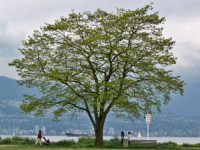
They sit down on one of the benches and watch all the people walking by. In front of them is a small inlet glistening in the sun, and beyond that is Downtown Vancouver. Several people are kayaking on the water. A small pedestrian ferry is slowly approaching.

They sit quietly in the warm sun for a while, eating their ice cream cones. When Alejandro finishes his cone, he says “This is so relaxing. I could sit here all day.”

“It’s a beautiful view of the city from here. I wish I was in one of those sailboats though, slowly sailing away.”

“That would be nice!”

“Let’s go to the market and get some vegetables for tonight’s dinner,” Ana says after a few minutes.

They get up and walk into the market. Inside, the smell of fresh bread and coffee fills the air. People are talking, laughing, and calling out orders. They wander around the crowded market for a while, looking at all the things for sale. Eventually they find a produce vendor.

“What do we need to get?” Alejandro asks.

“We need some carrots, red peppers, onions, strawberries, and blueberries.”

They collect the items and bring them up to the cashier.

“Hello,” says the man at the cash register. “Did you find everything you need?”

“Yes. I think we have everything we need,” Ana replies.

“That’ll be $24.45.”

Ana pays the man and Alejandro picks up the bag with the food in it.

“Thank you,” Ana says as the man hands her the change, “Have a nice day.”

“You, too.”

Ana and Alejandro walk out of the market into the bright, sunny day and head home.

Exame

Faça o exame on-line para ver como você entende o 'past tense' em inglês.

Alterar as seguintes frases ao 'past tense'. Certifique-se de usar maiúsculas e minúsculas corretas e não usar contrações.

Exemplo - Questão: I do the work. Responda: I did the work.

Progress

Dê-nos a sua opinião. like page dislike page Comentários